Address
304 North Cardinal St.
Dorchester Center, MA 02124
Work Hours
Monday to Friday: 7AM - 7PM
Weekend: 10AM - 5PM
Address
304 North Cardinal St.
Dorchester Center, MA 02124
Work Hours
Monday to Friday: 7AM - 7PM
Weekend: 10AM - 5PM

What Do Buyers Feel When They Walk Into Your Properties?
You can control the finishes, the fixtures, the floor plans. But can you control how a space makes people feel? The most successful developments don't just look good on paper. They feel right when buyers walk through. That "feeling" isn't magic. It's spatial energy, principles that environmental psychology studies and ancient traditions refined over 3,000 years. Now you can apply them systematically.
Build Properties That Feel Right From the First Walkthrough
Environmental Analysis for Any Site
Analyze how roads, water features, and neighboring structures affect your property using satellite maps. Understand external influences that shape how buyers perceive the space before they even walk in.
Instant Answers to Design Questions
Ask the AI assistant any spatial energy question during the design process. "Is this unit layout optimal?" "Where should the master bedroom face?" Get authoritative guidance in seconds.
Marketing Materials That Stand Out
Export professional overlays and analysis reports with your branding. Show clients exactly why you made each design decision, backed by principles of environmental psychology and classical spatial wisdom.

Entrance Optimization
The main entrance is where first impressions happen. Our analysis shows optimal door placement and orientation for maximum positive impact. This is the entry point that welcomes buyers in.
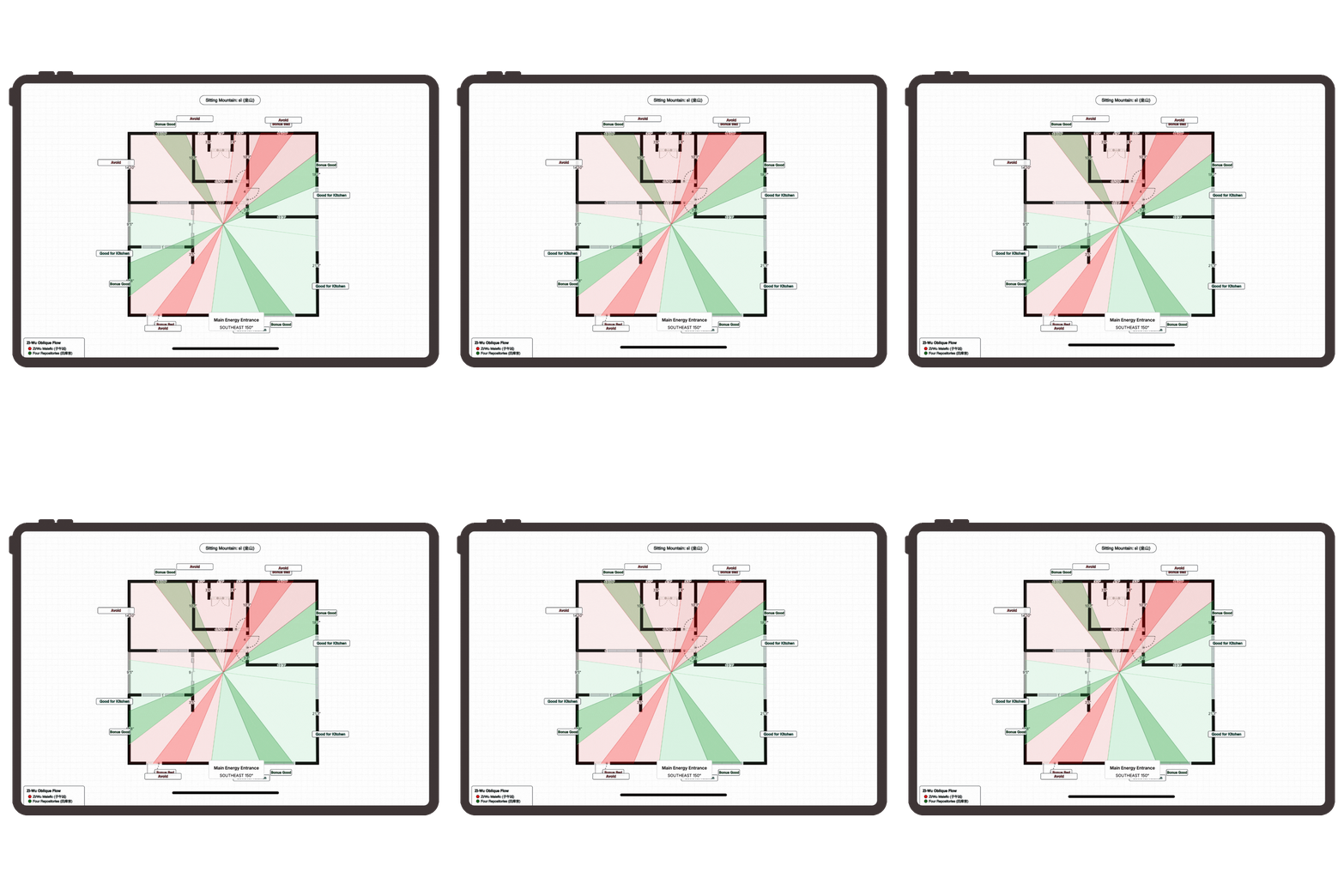
Floor Plan Energy Mapping
See which areas of your floor plans feel supportive and which create resistance. Visualize optimal zones and challenging areas, then adjust layouts before construction.
Model Unit Staging Optimization
Get furniture placement guidance based on energy flow principles. Model units staged with optimal positioning make buyers feel at home faster and more likely to commit.
No. While some buyers specifically seek fengshui-compliant properties, the principles translate to universal preferences: natural light, comfortable flow, balanced proportions. All buyers respond positively to spaces that "feel right," whether they can articulate why or not.
The earlier the better, ideally during floor plan design. Some spatial issues are easy to fix on paper but expensive to change after construction. That said, the tool is also valuable for optimizing model unit staging and marketing existing inventory.
Absolutely. Retail spaces, office buildings, and hospitality properties all benefit from spatial optimization. The principles of energy flow, entrance positioning, and zone mapping apply across property types.
Studies show buyers are willing to pay premiums for properties that "feel right." The wellness real estate market exceeds $275 billion globally. Properties optimized for spatial flow sell faster and generate fewer buyer objections.