Address
304 North Cardinal St.
Dorchester Center, MA 02124
Work Hours
Monday to Friday: 7AM - 7PM
Weekend: 10AM - 5PM
Address
304 North Cardinal St.
Dorchester Center, MA 02124
Work Hours
Monday to Friday: 7AM - 7PM
Weekend: 10AM - 5PM

Most feng shui tips you find online are stripped of the system that makes them work. Someone tells you to put a plant in the southeast corner, but which southeast? The corner of the room, or the compass bearing from the center of the house? The answer changes everything, and it is the difference between generic decorating tips and actual feng shui practice. Whether you are looking for shui tips for your home for the first time or have applied feng shui principles before, the distinction matters enormously.
The ancient art of feng shui is precise in a way that popular guides rarely capture. That precision is what separates rooms that feel accidentally balanced from rooms designed to support the people living in them. This guide covers 25 classical rules for every room in your home (bedroom, living room, kitchen, home office, bathroom, and entryway), drawn from the same compass-based analysis methods we use in every Law of Fengshui case study. Whether these are your first feng shui tips for beginners or you are looking to go deeper than the basics, this is where to start. Use feng shui principles as a framework for every room in your home, and the cumulative effect compounds across every space you improve.
Every rule in feng shui traces back to one concept: chi (qi). Chi is the animating force that flows through environments the way water moves through a landscape. In well-arranged spaces, it gathers and circulates. In cluttered rooms, it stagnates. Through poorly planned openings, it disperses before it can settle. Understanding chi is the foundation for everything else in this guide.
The ancient art of feng shui developed over thousands of years in China as a systematic method for reading and shaping the energy of your home. Classical practitioners used compass readings, astronomical references, and layered calculation systems to map where chi energy gathered, where it was blocked, and how it could be directed to support health, relationships, and prosperity. This approach is fundamentally different from the simplified Western version of feng shui (sometimes called BTB, or Black Sect Buddhism) which interprets every floor plan the same way regardless of compass orientation. Classical feng shui responds to the actual compass direction of each specific building. As our detailed breakdown of what is feng shui explains, that precision difference is one of the most consequential distinctions in all of feng shui practice.
Chi also operates through the governing principle of yin and yang: two complementary forces that require balance for a living space to feel both alive and restful simultaneously. Bedrooms lean yin: calm, restorative, dim. Kitchens and living rooms lean yang: active, bright, social. When a bedroom accumulates too much yang energy (overlit, device-saturated, cluttered with activity), sleep suffers measurably. When a living room is too yin (dark, closed, static), vitality and conversation flatten. The feng shui design principle of calibrating each room’s energy to its function is not abstract philosophy. It is practical room management with a 3,000-year track record.
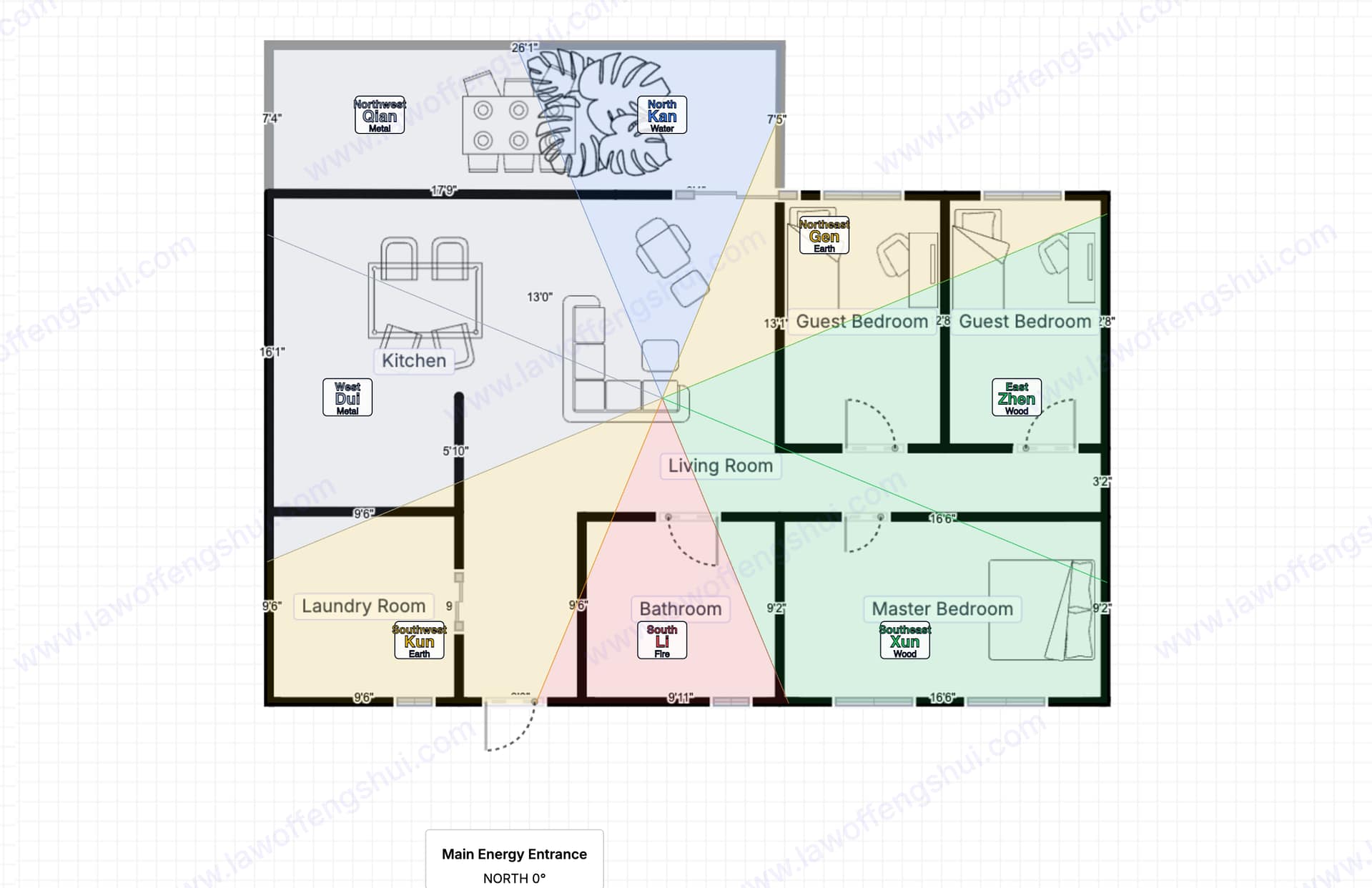
One more foundational point: classical feng shui is property-specific. The feng shui bagua map overlaid on your floor plan produces a unique energy reading for your building’s orientation that no other building shares exactly. A north-facing home and an east-facing home on the same street have completely different energy maps even with identical floor plans. Any advice that ignores the compass ignores the core of classical feng shui.
Rule 1: Understand which feng shui system any advice comes from before applying it. Classical feng shui is compass-based and property-specific. Simplified systems align to the front door regardless of compass direction. Every tip in this guide uses classical principles; they will work better when you know your building’s actual sitting direction.
Rule 2: Chi flows where space flows. Before any placement decision, walk every room and notice where you instinctively slow down, where you feel slightly constricted, and where movement feels natural. Chi follows the same paths you do. Blocked pathways, tight corridors, and furniture that forces awkward navigation all interrupt chi flow in the same way they interrupt yours.
Rule 3: Clutter is the single most universal bad feng shui in any home. Before compass analysis, before furniture placement, before element balancing: clear the clutter. Stagnant energy accumulates wherever objects pile up: under the bed, in corners behind furniture, in garage overflow, in overloaded closets. Applying feng shui principles to a cluttered home is like adding fresh water to a clogged pipe. A clean and clutter-free space is the baseline from which everything else works, and the most immediate way to promote positive energy flow in any room.
If there is a single feng shui rule more universal than any other, it is the command position (also called the commanding position). The principle: in any room, the person using that room should be positioned to see the door without being directly in line with it. The back faces a solid wall. The sightline to the door is unobstructed but diagonal, not head-on.
This rule appears across virtually every classical Chinese placement tradition. It is encoded in how emperors arranged their thrones, how military commanders positioned their tents, and how classical feng shui practitioners advise furniture placement across every room type. Modern environmental psychology has independently confirmed the underlying principle: people experience measurably lower stress and higher cognitive alertness when they can see a room’s primary entrance while backed by a solid wall. Our dedicated post on commanding position in feng shui covers the cross-cultural evidence and the psychological research that keeps arriving at the same conclusion 3,000 years later.
The command position applies specifically to the most-used furniture in each room:
Rule 4: Never sit or sleep with your back to the door. This is the most common, most consequential feng shui mistake, and the easiest to fix. The back-to-door placement generates a low-level stress response that accumulates over time in ways that are difficult to attribute but easy to feel once you understand what is causing them.
Rule 5: Diagonal from the door is the command position, not directly opposite. Being directly across from the door places you in the path of incoming chi, which is too activating for sleep and too exposed for the settled focus that work requires. The diagonal (far corner from the door, headboard or desk against the wall) is the strongest position. You need to be able to see the door without being directly in line with it. Environmental psychologists call it “prospect and refuge”: you can see the territory (prospect) from a protected position (refuge).
The bedroom is where chi management matters most. You spend six to nine hours there nightly in a physiologically receptive state, absorbing whatever energy the room holds. Getting the bedroom right is not a decorating exercise; it is an investment in sleep quality, physical recovery, and the emotional energy you bring into every waking hour. The feng shui principles for bedrooms exist because the bedroom’s energy shapes outcomes that compound daily.
Rule 6: Position your bed in the command position. The headboard presses against a solid wall. You can see the bedroom door from your pillow position. The placement of your bed should not be directly in line with the door; this creates what classical feng shui calls the “coffin position,” where you lie in the direct path of chi flowing through the door opening. Sleep science has independently found this orientation increases physiological arousal and disrupts deep sleep duration.
Rule 7: Do not place your bed under a window. A bed under a window lacks solid wall support behind the headboard, creating an energetic instability that classical feng shui associates with disturbed sleep and reduced personal vitality. Without the wall’s support, chi moves freely around the sleeper’s head rather than accumulating around the body. If the room’s layout leaves no alternative, a substantial, solid headboard provides a partial substitute.
Rule 8: Keep both sides of the bed accessible. A bed pushed against a wall on one side restricts the flow of energy around the sleeper and creates positional imbalance in the room’s energy field. Both occupants should have equal access to their own side of the bed, ideally with a matching bedside table on each side. This is a balance principle as much as a practical one.
Rule 9: Avoid mirrors that directly face the bed or reflect the bed. Classical feng shui is specific on this point: mirrors in the bedroom amplify and disturb chi, particularly during the night hours when reflective surfaces create an energetic activation that interferes with the yin, restorative quality the bedroom requires. Our post on feng shui bedroom mirror placement covers the Ba Zhai compass analysis that reveals how mirror placement interacts with sector-specific energies in ways that generic guides never address.
Rule 10: Remove electronics, exercise equipment, and work items from the bedroom. Every yang-energy object (a television, a laptop, exercise equipment) raises the room’s activation frequency and works against sustained deep sleep. The bedroom should serve one function: restoration. Strip it to the essentials.
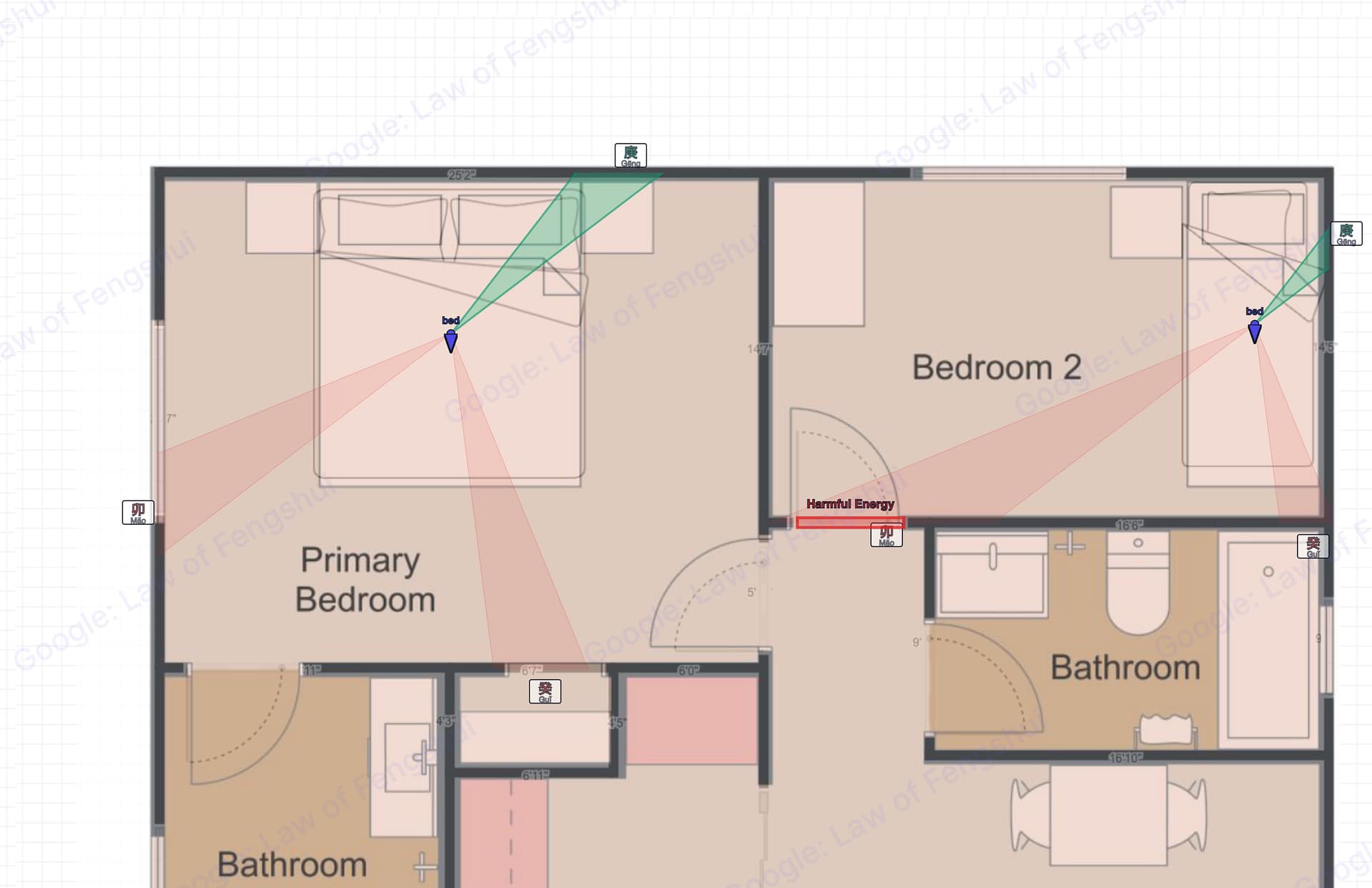
On compass-based bed placement: The rules above apply universally: every sleeper benefits from following them. Position your bed with the headboard on the best available compass wall, not just the nearest wall. But classical systems like He Chong add a layer of personal precision that generic feng shui bedroom tips cannot provide. He Chong maps your birth year to one of twelve Earthly Branches, then identifies which compass sectors within your bedroom are harmonious or clashing specifically for your branch.
In our feng shui bed placement case study of a Denver apartment with a north-facing orientation, a client born in the year of the Horse placed her bed against the north wall, the instinctive “head of the compass” choice. Compass analysis revealed that north is a Six Clash position for the Horse branch: one of the worst bed placements specifically for her birth year. The SSW corner, counterintuitive visually, was her strongest option by a significant margin. That is the kind of precision that personalized classical analysis provides that no general tip can replicate.
For the complete classical bedroom framework (layout rules, compass-verified bed placement, mirror analysis, and a full dos-and-don’ts checklist), see our feng shui bedroom guide. Annual stars like Tianxi and Hongluan shift feng shui bedroom energy calculations from year to year — what was the optimal placement in 2025 may not be the strongest choice in 2026. The feng shui furniture placement post covers the compass formula that maps each piece of bedroom furniture to its best sector.
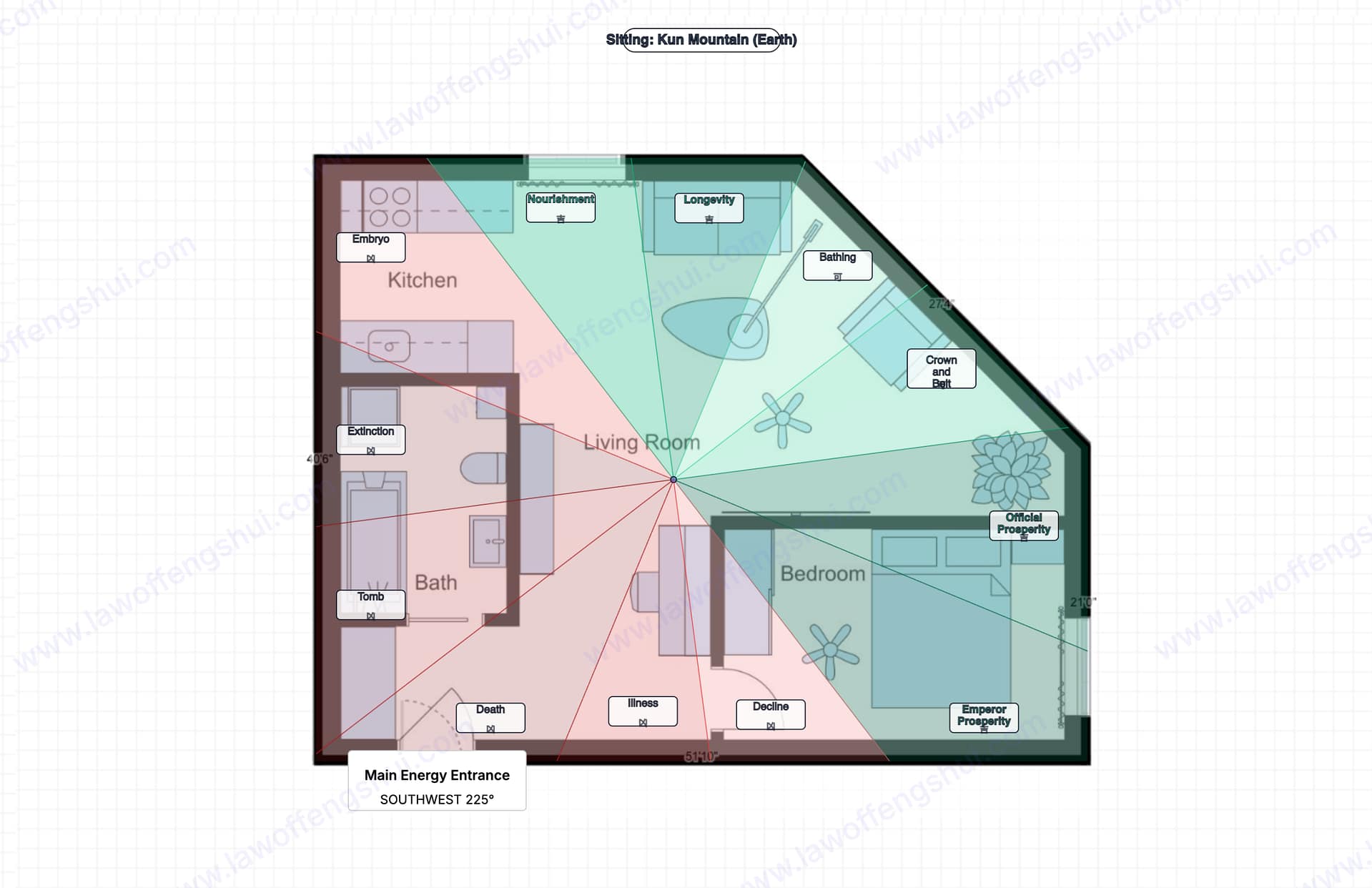
The living room is where household chi concentrates its social energy. It receives guests, hosts daily household interactions, and sets the baseline energy tone for every person who walks through the front door. Living room feng shui is about directing energy flow to keep chi welcoming, active, and balanced, without letting it become stagnant in corners or rush straight through the room without circulating.
Rule 11: Anchor the sofa with its back against a solid wall. The sofa is the command-position seat of the living room. Solid wall backing gives occupants a subconscious sense of security (the classical 玄武 principle of solid support) and allows them to see the room’s entrance from a relaxed, settled position. A floating sofa in the middle of the room loses this anchoring energy entirely.
Rule 12: Do not position the sofa directly in line with the front door. When chi enters through the main entry and cuts straight to the sofa, it rushes through the room without circulating. The living room’s energy should gather and move in curves, not race in straight lines. Angle furniture to direct chi through the space rather than past it.
Rule 13: Incorporate all five elements into the living room design. Classical feng shui organizes the natural world into five elements, each associated with materials, shapes, colors, and compass directions. A living room missing one or two elements creates an imbalance that is hard to diagnose without this framework:
Most living rooms naturally incorporate two or three elements through furniture and décor choices. The exercise is to identify what is absent and introduce it in at least one deliberate form.
Rule 14: Use mirrors to reflect living energy, not walls and closed doors. A well-placed mirror in the living room amplifies natural light, expands spatial perception, and promotes energy movement. A poorly placed mirror amplifies stagnant energy or, worst case, reflects the front door directly, pushing chi back out before it can circulate. Position mirrors where they reflect open space, natural light sources, or live plants.
Rule 15: Address corner stagnation with living elements. Chi naturally slows at corners. A floor lamp, a live plant, or a piece of rounded furniture in a corner keeps positive energy circulating. Sharp-cornered furniture directed toward seating creates “sha chi” (cutting, activating energy). Avoid angling table corners, shelf edges, or structural columns directly toward where people regularly sit.
In the feng shui living room case study from Day 26, a Chicago 2BR open-concept apartment demonstrated exactly why the instinctively appealing sofa position was the wrong one. The building’s north-facing orientation made it a Kan house (East Four house), and the visually dramatic NW corner with its vaulted ceiling sat in the 祸害 (Huohai, Calamity) sector, the fourth-worst Ba Zhai sector for this house type. The Ba Zhai target, confirmed independently by Na Jia Li analysis, was the east edge — a position that would have seemed secondary without compass verification. For the complete analysis, see our feng shui living room guide.
The feng shui wealth corner post is directly relevant to living room arrangement: the Zi-Wu Oblique Flow system identifies four Repository positions (ESE, WNW, NNE, SSW) that are structurally auspicious regardless of personal branch, often falling in or near the living room space.
Curious which rooms in your home are working with your energy — and which are working against it?
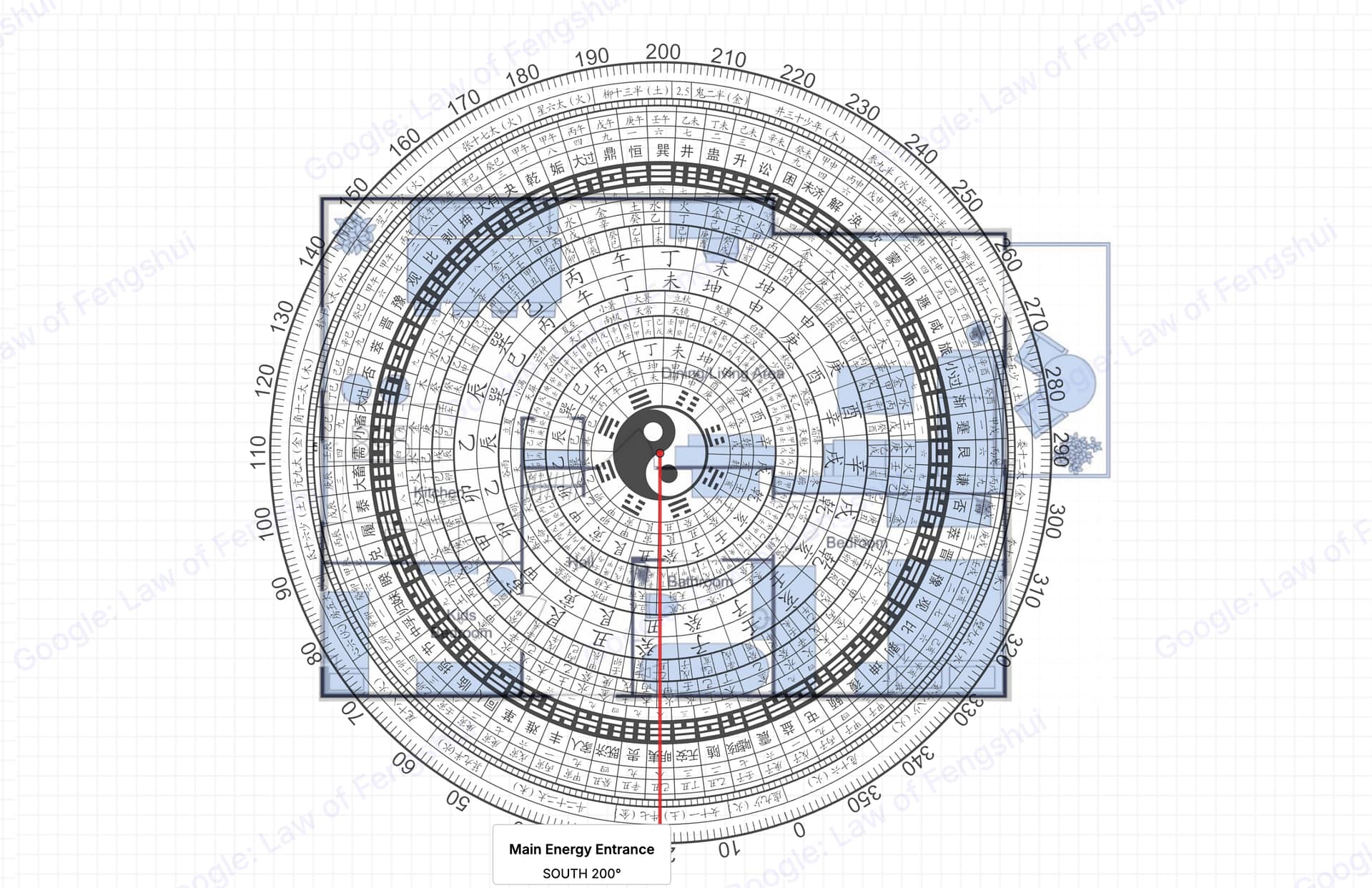
Our sample report applies Ba Zhai Eight Mansions, He Chong, and Zi-Wu Oblique Flow to a real floor plan, showing sector-by-sector how these 25 rules map onto an actual property.
In classical feng shui, the kitchen holds a special position in the home's energy hierarchy. It is associated with Fire, the most powerful and volatile of the five elements, and with nourishment, which the tradition equates directly with prosperity and household vitality. This is why feng shui kitchen tips carry disproportionate weight: kitchen feng shui is, in classical terms, wealth feng shui.
The stove represents your wealth. This is not metaphor. Classical feng shui treats the stove as the household's primary wealth-generating element because it transforms raw resources (food) into nourishment and sustenance: the fundamental cycle of material prosperity. A poorly placed, damaged, or neglected stove is treated as a financial vulnerability. A clean, functional, well-positioned stove is one of the most accessible wealth activations available without renovation.
Rule 16: Keep the stove clean and every burner functional. A broken burner is a blocked wealth channel in classical analysis. Even in households that rarely cook, every burner should be tested regularly and maintained in working order. The stove should never double as overflow storage.
Rule 17: The cook should be able to see the kitchen entrance from the stove. The command position applies to the kitchen: to create good feng shui in any cooking space, the person at the stove should not have their back to the room's primary entrance. If the kitchen layout places the stove against a wall with the cook facing away from the door, a small mirror or highly polished splashback positioned to provide a reflected sightline is the classical solution, not ideal but effective as a practical workaround.
Rule 18: Separate Fire and Water elements within the kitchen triangle. The stove (Fire element) placed immediately beside or directly across from the sink or refrigerator (Water element) creates an elemental conflict that classical feng shui associates with financial disruption and household tension. If this layout is fixed, introduce Earth element between the two: a yellow or brown countertop section, a ceramic tile divider, or an earthen-toned splashback creates a buffer between the competing elements.
Rule 19: The kitchen should not be the first room visible upon entering the home. When the stove is immediately visible from the front entry, classical feng shui holds that wealth energy burns away too quickly, a symbolic principle that also reflects the practical reality that appetite stimulation as the home's first impression skews household energy toward consumption rather than accumulation.
Our feng shui kitchen post shows two classical systems, Nine Star overlay and Zi-Wu Oblique Flow, applied to the same apartment floor plan. They converged on the same kitchen placement recommendation while pointing away from the location the building's designer had chosen. That convergence between independent systems is the kind of multi-layer verification that classical feng shui offers and generic kitchen feng shui tips cannot replicate.
The rise of remote work has made home office feng shui more consequential than ever. A misaligned office does not just feel slightly off; it creates structural conditions that degrade focus, slow output, and make sustained productive hours harder to maintain over months and years. The good news is that feng shui design for the home office follows clear, actionable rules that are among the most immediately testable in all of feng shui.
Rule 20: Face the room's entrance from your desk. The command position for the home office: back against a solid wall, desk facing the door at a diagonal angle, not directly across from it or backed against it. If the room layout prevents this, a mirror positioned so that you can see the door reflected from your seated position is the classical workaround. Either way, the goal is unimpeded awareness of your primary entry point combined with solid support behind you.
Rule 21: Keep the desk surface and the office space clean and clutter-free. Clutter on a desk is stagnant energy made visible. Unfinished projects, paper piles, and unresolved items are, in feng shui terms, active blockers of chi that circulates through the workspace. A clean desk (not minimalist for aesthetic reasons, but clear of genuinely unresolved business) allows chi to move freely around the work surface and supports the mental clarity that focused work requires. This is the work from home feng shui rule that most directly connects to measurable productivity.
Rule 22: Use your personal favorable direction to orient the desk. Every person has, based on their birth year and gender, four favorable and four unfavorable compass directions derived from their Kua number in the Ba Zhai system. The four favorable directions, Sheng Chi (生气, vitality), Tian Yi (天医, health), Yan Nian (延年, relationships), and Fu Wei (伏位, stability), support focus, vitality, connections, and grounding respectively. The four unfavorable directions are associated with various forms of loss and disruption. Positioning the desk so that you face your most favorable direction is a high-leverage home office adjustment that costs nothing and requires only a compass bearing. A feng shui expert can determine this bearing from your birth year in minutes.
Our feng shui home office post shows Wenchang analysis, a related birth-year calculation, identifying the optimal study location for a specific child, with the Wenchang direction varying between individuals in the same household. The feng shui office layout post shows two remote workers in the same apartment whose energy analysis pointed them to different rooms within the same floor plan, with measurably different working conditions as a result.
The bathroom presents a persistent energy management challenge: Water drains away from the home through every fixture in the room, and if chi follows that drain, the bathroom becomes a net exporter of beneficial energy rather than a generator of it. The feng shui bathroom tips that seem most like folk superstition (keep the lid down, keep the door closed) are structural responses to a genuine elemental management problem.
Rule 23: Keep the bathroom door closed and the toilet lid down at all times. These habits limit how much chi is drawn toward the room's drains. An open bathroom door creates a direct path for chi to travel from the main living spaces toward the water drainage point of the house. The toilet lid closed simply reduces the active surface area of the primary drain. Small, consistent habits that compound over months into a meaningful energy difference.
Rule 24: Add live plants to the bathroom. According to feng shui, plants introduce Wood element, which is the natural counter to excess Water element energy in classical theory. They also introduce living chi — active, growing energy — into a space otherwise dominated by drainage. Low-light, humidity-tolerant varieties (pothos, peace lily, snake plant) thrive in bathrooms and require minimal maintenance. Even one small plant on the vanity counter fundamentally changes the room's energy composition. Keep the bathroom clean and free of unnecessary products and clutter; shui tips for the bathroom that ignore cleanliness are missing the foundation. Taken together, Rules 23 and 24 redirect a space that naturally drains energy into one that actively brings positive energy into your home rather than siphoning it away.
Classical feng shui's most instructive lessons come from analyzing what goes wrong. The most common feng shui mistakes share a pattern: they feel intuitively reasonable from a floor-plan or decorating perspective but violate the feng shui rules for energy circulation that only become visible once you understand how chi moves.
Mistake 1: The bed directly in line with the door. This is the most frequent bad feng shui bedroom placement. The bed's feet point directly at the door opening (the classical coffin position, named because it mirrors the posture of a body being carried out of a room). Modern sleep research independently confirms this orientation increases arousal and disrupts deep sleep. If you have one bedroom change to make, this is it.
Mistake 2: A mirror directly opposite the front door. Mirrors placed facing the front door reflect incoming chi immediately back out before it can circulate through the home. This is a near-universal classical rule with near-universal consequences: homes where the first reflective surface inside the door is a mirror often feel energetically flat regardless of what other improvements have been made. Move or angle any mirrors in the entry toward the side wall rather than facing the door directly.
Mistake 3: Items stored under the bed. In classical feng shui, items stored under the bed create energy blockages in the space closest to the sleeper during the most receptive hours. The space under the bed should be empty and allow free air and chi circulation. Boxes, luggage, and storage bins under the bed are among the most commonly flagged items under the bed in classical bedroom audits.
Mistake 4: Broken things left unrepaired. A broken stove burner closes a wealth channel. A leaking faucet drains wealth energy. A cracked mirror distorts what it reflects. Non-functional light bulbs interrupt light chi. Classical feng shui treats every broken item in the home as a blocked energy channel, with specific consequence patterns depending on which element is affected. Fix what is broken before adjusting placement.
Mistake 5: Fire and Water elements directly adjacent in the kitchen. Stove beside the sink, stove directly opposite the refrigerator. These are the most common and most consequential elemental conflicts in residential feng shui. If you look at your kitchen and find this layout, introducing Earth element between the two (any brown, yellow, or ceramic material) is the mitigation.
Mistake 6: Furniture arranged to maximize floor space rather than promote energy circulation. Floor space optimization is an interior design principle, not a feng shui principle. Long, unobstructed paths from door to door accelerate chi into sha chi (rushing, cutting energy). Furniture that creates natural pauses and curves in the flow path is better feng shui than furniture pushed against walls to maximize central open space. Correcting these six mistakes creates good energy in a home that makes every subsequent adjustment more effective.
Our post on bad feng shui front door placement covers the Yellow Spring taboo (Ba Sha Huang Quan), a compass-based mistake that most homeowners never know to check. The feng shui mistakes post on the Jie Sha sector shows how that malefic applies to specific building orientations in ways that go far beyond the common no-no in feng shui lists.
Want to see all 25 feng shui rules applied to a real floor plan at once?
Our sample report runs 15+ classical compass systems on an actual apartment and shows which rooms and furniture placements align with each occupant’s personal energy sectors.
The path to the front door is where chi first encounters your home. What happens there, whether energy gathers, approaches naturally, or disperses before entering, shapes the energy of your home and the baseline for every room inside. Classical feng shui devotes significant attention to the front door and its approach precisely because this is where chi intake begins.
Rule 25: Keep the path to the front door clear, well-lit, and visibly maintained. Overgrown landscaping blocking the walkway, a burned-out entry light, a faded or damaged front door. Each of these conditions slows or diverts incoming chi before it reaches your home. The approach should feel easy to navigate and cared-for. This is the feng shui equivalent of keeping the mouth of chi in good working order.
Equally important: wash your door. A clean front door is one of the most consistently recommended maintenance practices across classical feng shui traditions. In classical terms, the front door is the primary chi intake for the entire feng shui house: what enters here shapes everything inside your home. Dirt, grime, or faded paint on the primary chi intake point is the kind of small neglect that accumulates into meaningful energetic drag. Repaint if the paint is peeling. Oil the hinges if they squeak. Replace or repair damaged hardware. The door should function and appear as though it is genuinely welcoming the energy that the household needs.
Inside the entry: ensure that chi has space to gather before circulating through the home. A door that opens directly into a wall, a steep staircase, or immediately into the main living area does not give chi a settling point. Use mirrors angled toward the side of the entry (never directly facing the door), warm lighting, and uncluttered horizontal surfaces to create an energetic transition zone between outside and inside. This is the part of your home that functions as a breath before the home speaks: it should be composed and welcoming.
For a deeper look at how the front door's compass direction interacts with specific classical malefic sectors, our feng shui front door post applies the Yellow Spring taboo to a real La Jolla property and shows how specific door-sitting direction combinations create problems that door maintenance alone cannot resolve.
Reading these tips is a useful start. Applying them consistently produces meaningful change. But the highest-leverage feng shui intervention available is a classical analysis that addresses your specific property, your actual compass readings, and your personal birth-year data to identify precisely which spaces in your home support you and which work against you, and by how much.
A certified feng shui consultant working in the classical tradition begins with compass readings of the front door and sitting direction of the building. From there, multiple systems are overlaid on the floor plan: Ba Zhai Eight Mansions maps the building's energy sectors based on its facing direction. He Chong identifies personal harmony and clash positions for each occupant's birth-year branch. Zi-Wu Oblique Flow reveals structurally auspicious and malefic positions that apply to the property regardless of personal data. The result is not a generic energy audit; it is a room-by-room, sector-by-sector, furniture-by-furniture analysis that produces compass-verified placement recommendations for the specific people living in the specific building.
The difference between applying feng shui tips and receiving a feng shui consultation is the difference between general wellness advice and a medical examination. The tips in this guide address the most common problems correctly. A full consultation reveals the specific configuration of your home and the specific placements that match your household's composition.
The Law of Fengshui tool brings the analytical layer of classical consultation into a self-service format. Built by a feng shui educator trained in classical systems, it applies compass-verified methodology to any floor plan. You can run compass-based overlays on your own floor plan (Ba Zhai Eight Mansions, He Chong bed placement, Zi-Wu Oblique Flow, Twelve Longevity Cycles, Na Jia Li furniture harmony) using your property's actual facing direction. It is the same multi-system methodology used in every case study we have published across 26 days of analysis.
For a fully personalized assessment with expert interpretation (covering your complete household's energy mapping, priority placements for the most consequential furniture pieces, and a written report of compass-verified recommendations), our feng shui consultation service is the starting point. A classical analysis does not tell you to put a crystal in the southeast corner. It tells you exactly which sectors of your specific home align with each occupant's personal energy matrix, what furniture belongs there, and what is working against you that you are not currently aware of.
Applying these feng shui tips systematically (every room in your home, one rule at a time) produces the cumulative energy shift that improves the energy in your home and transforms a house into a genuine feng shui home. The principles of feng shui reward consistent application: each room in your home that improves strengthens the whole. These room tips from a classical compass tradition go deeper than décor; they reflect the energy logic that each part of your home serves in the household's overall chi map.
Curious what 15+ classical feng shui systems reveal about a real home?
Our sample report shows every overlay on an actual floor plan so you can see the difference between classical analysis and generic advice.
Start with three foundational basics: clear clutter from every room, apply the command position to your bed and desk (positioned to see the door, back to the wall), and maintain the front door and the path leading to it. These changes reflect the core feng shui principles that apply universally and address the most common problems in any home without requiring compass data or professional consultation. Applying feng shui from this foundation consistently produces compounding results. They are the entry point to everything else in feng shui practice.
The command position means placing your bed, desk, or sofa so that you can see the room’s primary entrance without being directly in line with it. Your back faces a solid wall. The angle is diagonal; you can see who enters, and you are supported from behind. Environmental psychology research has confirmed independently that this placement reduces stress responses and increases alertness and security. It applies universally to every major room.
Chi (qi) is the animating life-force energy that classical feng shui seeks to attract, circulate, and balance within a space. It gathers where environments are well-maintained and thoughtfully arranged. It stagnates in cluttered, blocked, or neglected spaces. It disperses through poorly positioned openings. Every feng shui tip, from bed placement to mirror positioning, is ultimately an instruction for managing chi flow in a specific part of the home.
The most frequent feng shui mistakes include: placing the bed directly in line with the bedroom door (the coffin position), putting a mirror directly opposite the front door, storing items under the bed, leaving broken appliances or fixtures unrepaired, placing the stove immediately beside or across from the sink or refrigerator (Fire-Water conflict), and arranging furniture to maximize floor space rather than promote energy circulation.
Classical feng shui treats the stove as the household’s primary wealth-generating element because it transforms raw resources into nourishment, equated symbolically with the fundamental cycle of material prosperity. A clean, fully functional stove is considered a wealth activator. A damaged, dirty, or poorly positioned stove is a blocked wealth channel. This is why feng shui kitchen tips place disproportionate emphasis on the stove’s condition, placement, and relationship to water elements nearby.
A good feng shui bedroom layout places the bed with its headboard against a solid wall, the sleeper able to see the bedroom door without lying directly in line with it, and both sides of the bed accessible. Mirrors should not directly reflect the bed. Electronics and work items should be removed or minimized. For compass-specific bed placement that goes beyond these universal rules, personal direction analysis using He Chong or Ba Zhai adds a layer of precision that generic tips cannot provide.
The five elements, Wood, Fire, Earth, Metal, and Water, are classical feng shui’s framework for classifying objects, materials, colors, and directions. Wood: plants, vertical forms, green tones. Fire: warmth, triangular shapes, reds and oranges. Earth: ceramics, square or low forms, yellows and browns. Metal: metallic finishes, circular shapes, whites and grays. Water: flowing forms, dark tones, glass. A balanced room incorporates all five in at least minimal form. The living room is the most common room where element balancing is applied deliberately.
The front door is the primary chi intake point for the home. Classical rules include: keep the path to the front door clear and well-lit, maintain the door itself (clean it regularly, repaint if faded, repair hardware), never place a mirror directly opposite the door, and ensure there is space just inside the entry for chi to gather before circulating through the home. Beyond these universal rules, the compass direction of the front door interacts with the house’s sitting direction to create specific classical taboo conditions that require compass analysis to identify.
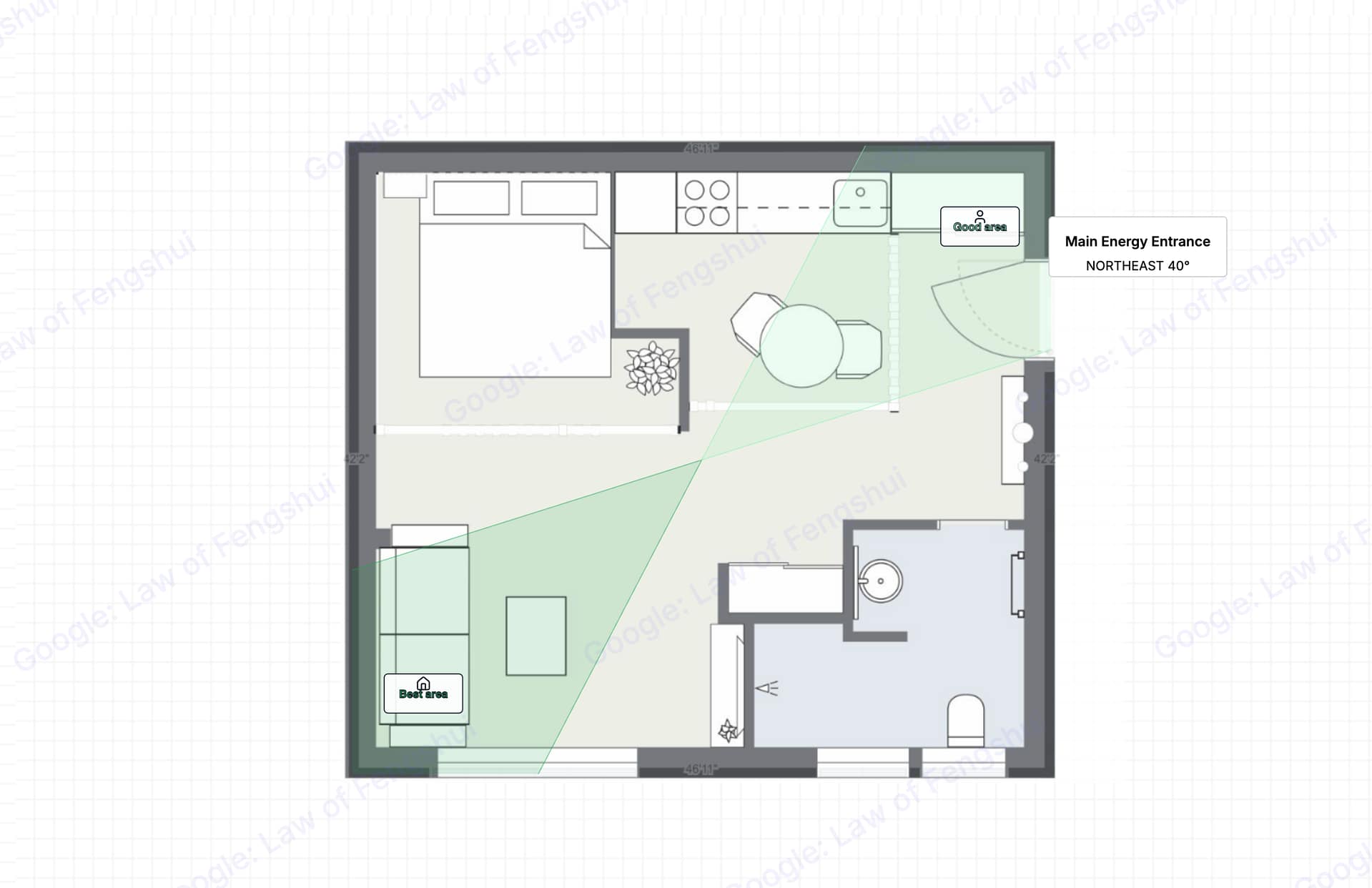
For those who live in a small space, the priority is flow over decoration. Clear all pathways between rooms so chi can circulate without obstruction. Maximize natural light. Use mirrors to extend perceived depth, positioned to reflect open space or light sources, not walls. The command position still applies: even in a studio apartment, the bed or sofa should be positioned diagonally from the door with solid backing. In small spaces, clutter management becomes doubly important because chi has less room to route around blockages.
Yes: a mirror placed directly opposite the front door reflects incoming chi back out before it can enter and circulate through the home. This is one of the most consistent rules across classical feng shui traditions. If your entry has a mirror facing the door, angle it toward the side of the hallway so it reflects open space rather than the door. Side-angled mirrors in entries are beneficial: they expand visual space and circulate energy without deflecting it back out.
Classical feng shui uses a compass to orient the Ba Gua map to the actual magnetic direction of the building. Two houses with different compass orientations produce different energy maps even with identical floor plans. BTB (Black Sect) feng shui aligns the Ba Gua to the front door regardless of compass direction, so every home gets the same sector layout. Classical feng shui produces property-specific recommendations. BTB is simpler but responds to door position rather than the building’s actual relationship to Earth’s magnetic field.
A classical feng shui consultation begins with compass readings of the front door and sitting direction of the building. Multiple analytical systems — Ba Zhai Eight Mansions, He Chong, Zi-Wu Oblique Flow — are overlaid on the floor plan to identify which sectors are most beneficial for each occupant based on both the building’s orientation and each person’s birth-year data. You receive room-by-room recommendations with compass verification. The Law of Fengshui online tool provides the analytical layer of this kind of assessment in a self-service format; a full consultation adds expert interpretation of the results for your specific household composition.
Alex Song is the founder of Law of Fengshui, a classical feng shui analysis platform that applies He Chong, Ba Zhai, Xuan Kong, and Zi-Wu Oblique Flow systems to residential and commercial floor plans. Law of Fengshui is the first rule-based system to automate classical feng shui compass analysis at scale.