Address
304 North Cardinal St.
Dorchester Center, MA 02124
Work Hours
Monday to Friday: 7AM - 7PM
Weekend: 10AM - 5PM
Address
304 North Cardinal St.
Dorchester Center, MA 02124
Work Hours
Monday to Friday: 7AM - 7PM
Weekend: 10AM - 5PM

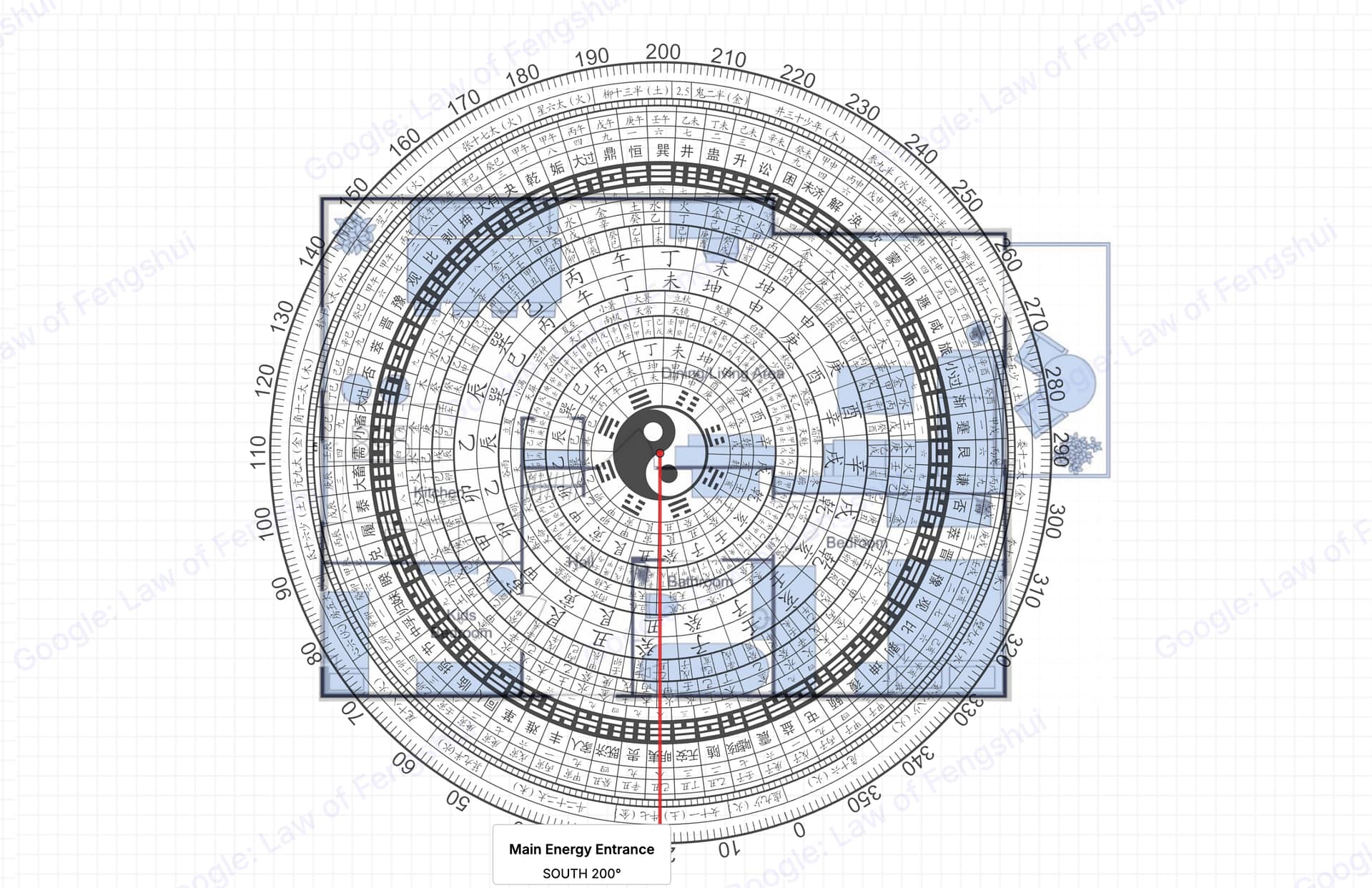
If you’ve studied the feng shui compass at all, you’ve probably learned about 24 Mountains. Twenty-four sectors, 15 degrees each, covering the full 360-degree ring around any property. It’s the foundation of classical compass school feng shui. And it’s real analysis, not the simplified 8-zone Ba Gua that most introductory courses cover.
But here’s what most courses leave out: the 24 Mountains you learned are just one plate on the compass. The classical luopan (luo pan) has three.
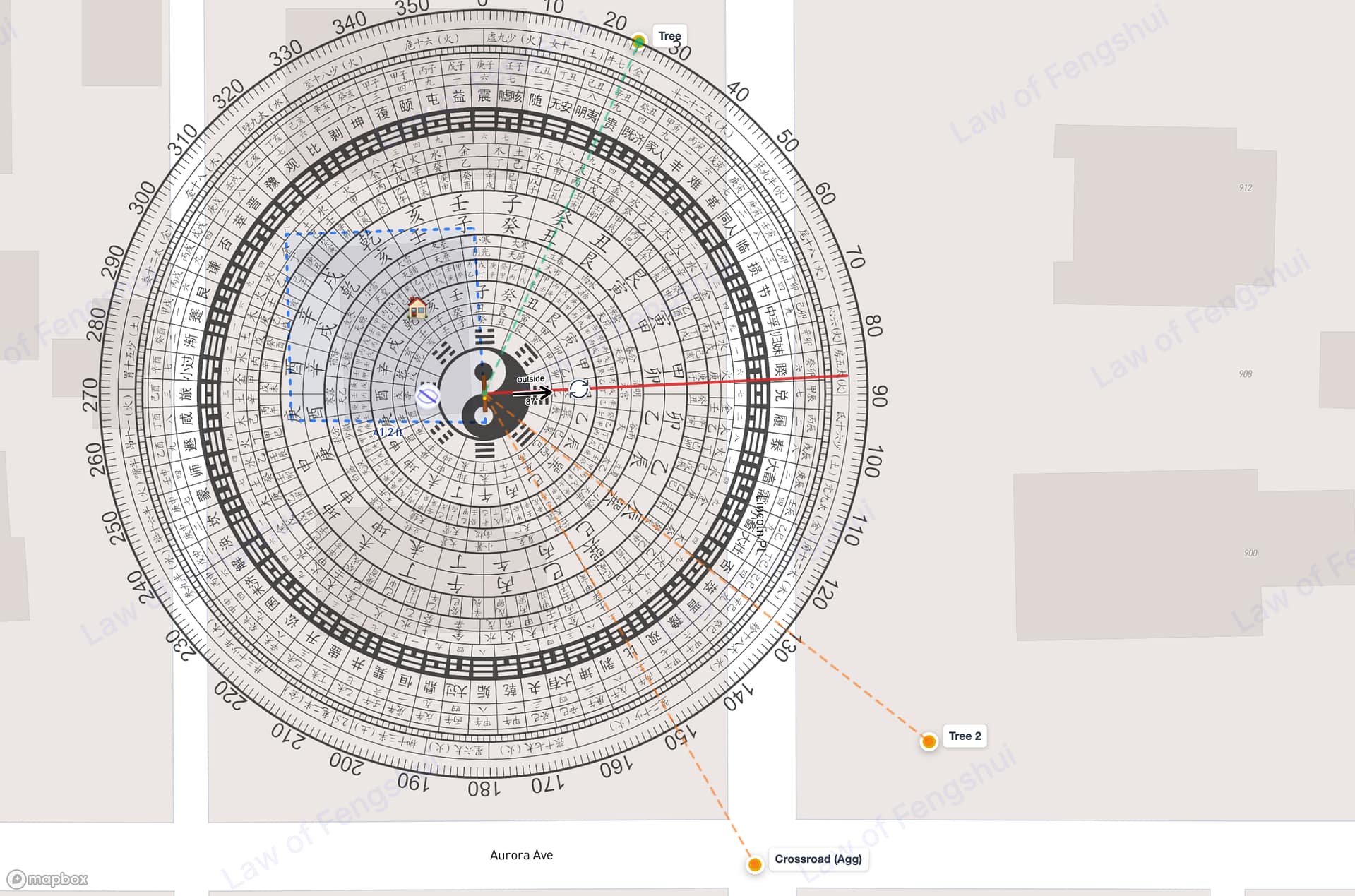
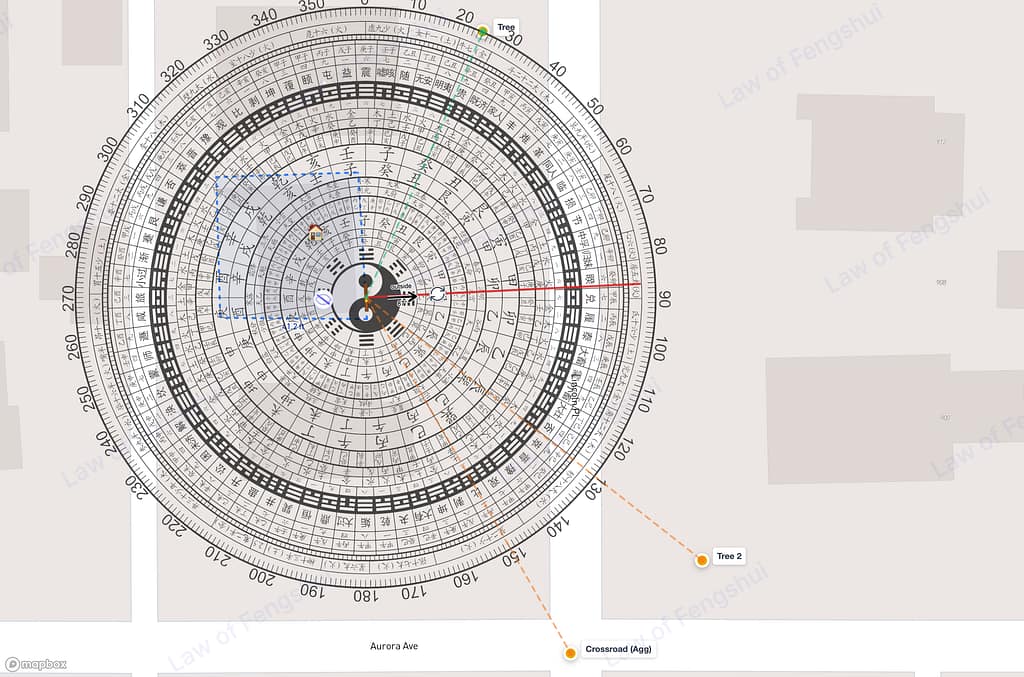
I ran the second plate, the Tian Pan (Heaven Plate), on a residential property in Boulder, Colorado. East-facing house, sitting West. Three surrounding features got mapped. Every single one landed in a different sector than it would on the standard plate.
Same property. Same features. Different readings.
A feng shui compass, called a luopan in Chinese, is a specialized instrument used in classical feng shui to measure the directional energy around a property. Unlike a regular compass that simply points north, a luopan contains multiple concentric rings, each encoding different layers of feng shui analysis. Practitioners use it to determine a property’s sitting and facing direction, assess surrounding landforms, and evaluate water features and roads.
The luopan is the core tool of Compass School feng shui. If you’ve only worked with the Ba Gua map and its 8 zones, you’ve been working with a simplified version of what this instrument measures. The full luopan breaks those 8 feng shui bagua directions into 24 finer sectors, and then measures each sector across three separate plates.
The physical luopan, the traditional feng shui compass that practitioners have used for centuries, isn’t a single ring. It’s a layered instrument with multiple concentric rings. Three of those rings matter most:
Di Pan (地盤) – The Earth Plate This is the plate most people learn. Standard compass bearings. 24 Mountains at their “home” positions. Used for determining the feng shui house facing direction and sitting direction. When someone says they ran a 24 Mountains analysis, they’re usually talking about Di Pan. It’s also the plate used for flying star feng shui calculations.
Tian Pan (天盤) – The Heaven Plate The middle ring. Every sector is shifted +7.5 degrees clockwise from Di Pan. Same 24 mountain names, same 15-degree sectors, but rotated slightly. This plate is specifically used for assessing water, including rivers, streams, drainage, and roads (roads count as virtual water in classical feng shui principles). The +7.5 degree offset accounts for how qi carried by moving water arrives at a property at a slightly different effective angle than the raw compass bearing.
Ren Pan (人盤) – The Human Plate The outer ring. Shifted -7.5 degrees counterclockwise from Di Pan. Used for assessing surrounding mountains and static landforms, including hills, ridgelines, tall buildings, and other permanent terrain features. The counterclockwise offset accounts for how qi from static objects interacts differently with a property than qi from flowing features.
Three plates. Three types of external energy. One compass.
The shift sounds small. 7.5 degrees. But each 24 Mountain sector is only 15 degrees wide. That means the Tian Pan offset is exactly half a sector width. Any surrounding feature sitting near a sector boundary on Di Pan will cross into the adjacent mountain under Tian Pan.
Different mountain means different element type. Different classical associations. Potentially a completely different assessment of whether that feature helps or hurts the property.
Here’s what happened with the Boulder property.
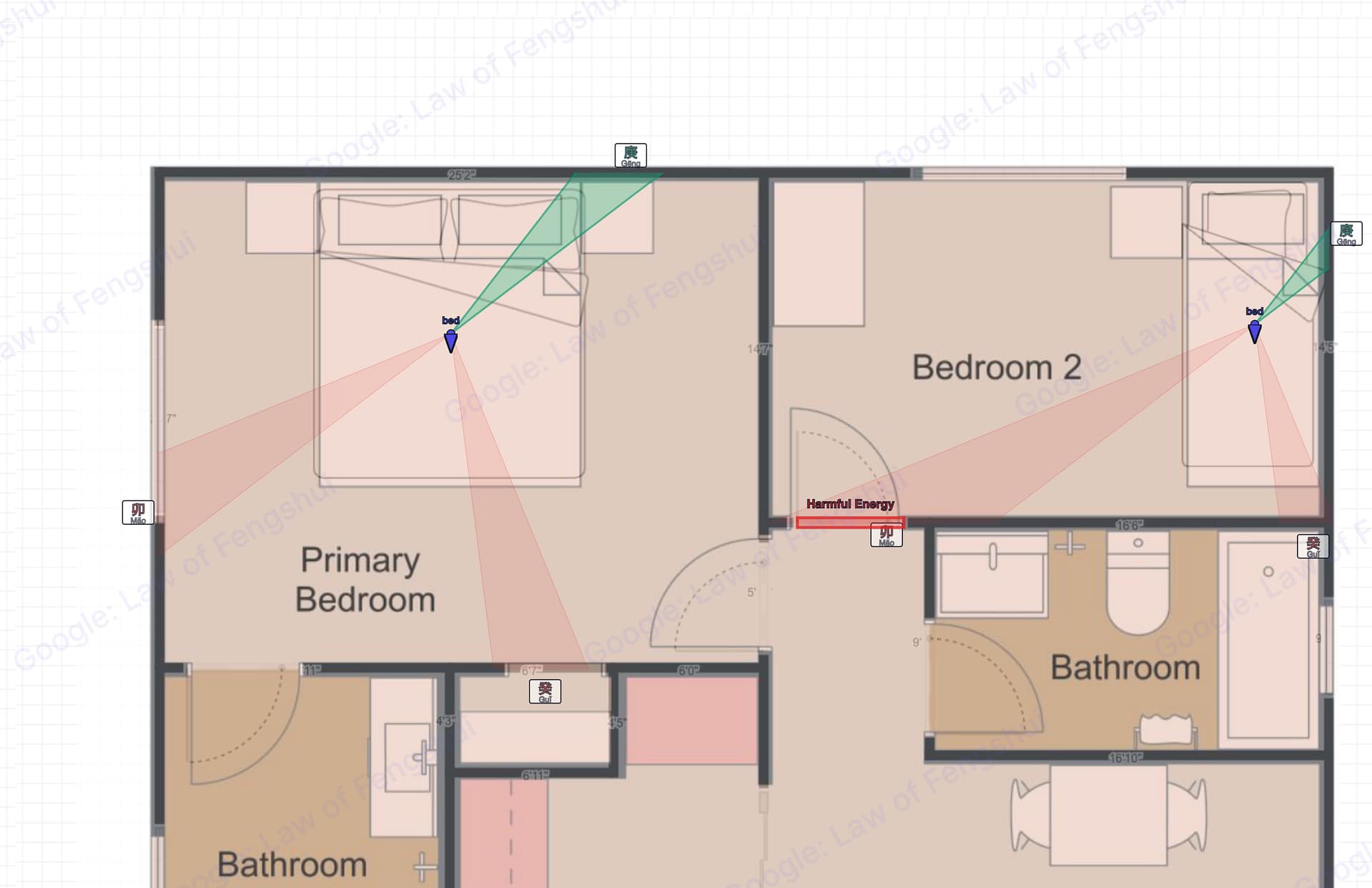
Want to see the 24 Mountains mapped on a real floor plan?
Our sample report runs the full 24-sector compass analysis at 15-degree precision, color-coded by type: Gua, Stem, and Branch.
Property details:
Three surrounding objects were mapped using the Tian Pan (+7.5 degree offset):
| Object | Tian Pan Sector | Type |
|---|---|---|
| Crossroad (south) | 巳 si | Branch |
| Tree 2 (southeast) | 辰 chen | Branch |
| Tree (north) | 癸 gui | Stem |
Under the standard Di Pan, each of these objects would register in the adjacent sector, shifted back by 7.5 degrees. The crossroad that reads 巳 (si) under Tian Pan would read differently under Di Pan. For a practitioner assessing that road’s impact on the property’s water feng shui, using the wrong plate gives the wrong reading.

Before you can use any of the three plates on a feng shui compass, you need the property’s facing direction. This is the single most important feng shui compass reading you’ll take, because every subsequent analysis depends on it.
The feng shui house direction isn’t always the same as the front door direction. The facing side is the side of the building that receives the most yang energy, typically the side with the most openness, light, and activity. In many homes, that’s the front. But for properties facing a busy road on one side and a quiet garden on another, the yang side might not be where you expect.
Stand at the center of the property and take a compass reading toward the facing side. That gives you the facing mountain on the Di Pan. The sitting direction is exactly 180 degrees opposite. From there, you can layer on the Tian Pan and Ren Pan readings for surrounding features.
For the Boulder property, the facing direction was 卯 (mǎo), due East. That’s a Wood-element facing. The sitting mountain, 酉 (yǒu), is due West, Metal element. This pairing, 酉卯, sets up the entire framework for which sectors are favorable and which create friction.
This is where most practitioners get confused. Or more accurately, where most training material falls short. Most feng shui rules you’ll find online only reference the Di Pan, because it’s the only plate most courses teach.
Use Di Pan when:
Use Tian Pan when:
Use Ren Pan when:
The mistake most people make is using Di Pan for everything. It gives correct readings for sitting and facing, that’s its job. But when you point the Di Pan at a road and assess it, you’re using the wrong ruler. Roads are water. Water gets Tian Pan.
Yes. In classical feng shui, roads and traffic corridors are treated as virtual water. Qi follows movement, and in modern environments, roads function as the primary channels where energy flows past a property. Intersections are considered water mouths (水口), the points where energy converges and disperses.
This comes up a lot. “There’s no river near my property, so water feng shui doesn’t apply to me.”
It does. Classical feng shui treats roads and traffic corridors as virtual water. The reasoning: qi follows movement. In ancient China, water was the primary moving feature in any landscape. In modern environments, roads, highways, and traffic patterns carry the same function. They’re channels where energy moves past your property.
The crossroad south of this Boulder property is a perfect example. It’s an intersection on Aurora Ave, a road junction where traffic flows converge and diverge. In classical terms, that’s a water mouth (水口). And water mouths get assessed on the Tian Pan, not the Di Pan.
Under Tian Pan, this crossroad falls in the 巳 (si) mountain. Si is an Earthly Branch, associated with the Snake in the Chinese zodiac system, and carries Fire element energy. The classical implications of a fire-element water mouth in the south sector are specific, and they’re different from what you’d get reading the same crossroad on the Di Pan.
In 2026, the Fire Horse year, the Tai Sui occupies the South sector. For properties with roads or water features in the south, using the correct Tian Pan reading becomes especially critical. A south-sector road assessed on the wrong plate could miss a Tai Sui conflict entirely.
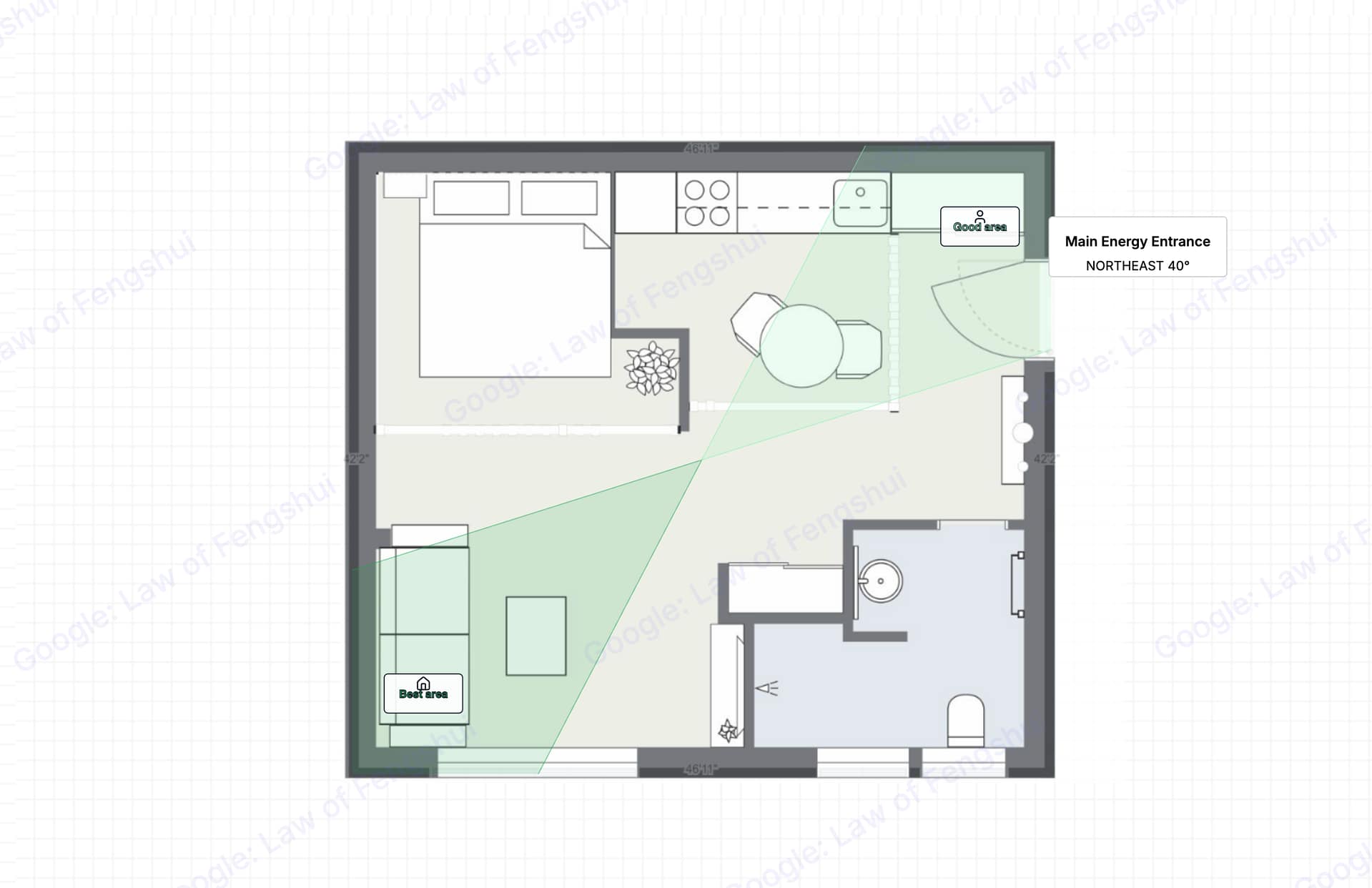
Curious how the three compass plates change the analysis of a real property?
Our sample report applies Di Pan, Tian Pan, and Ren Pan readings to an actual floor plan so you can see how the layers differ.
If you’ve been following this series, you might remember the Day 6 analysis that compared 8 Ba Gua zones to 24 Mountains. That was about precision of detail, going from 45-degree feng shui bagua directions to 15-degree sectors.
Today’s analysis is about precision of method. Same 24 sectors, but measured from a different starting point depending on what you’re assessing. The jump from 8 zones to 24 sectors was a 3x precision upgrade. Using the correct plate for the correct assessment type is a qualitative upgrade. You’re not just getting more precise, you’re getting the right answer for the right question.
Think of it like this: using Di Pan for water assessment is like measuring temperature with a ruler. The ruler is perfectly calibrated, but it’s the wrong tool for what you’re measuring.
When a practitioner evaluates a property’s external environment properly, they’re running three overlapping analyses:
Three scans. Three plates. Three layers of information. And they can give contradictory results. A mountain that looks supportive on Di Pan might register differently on Ren Pan. That contradiction itself is useful data.
If you’re doing any kind of feng shui compass reading on the external environment around a property, check which plate you’re using. The default in most software and most training is Di Pan. That’s fine for sitting and facing direction. But the moment you start assessing roads, intersections, rivers, or drainage, switch to Tian Pan.
The 7.5 degree difference can change the assessment entirely. Especially for features that sit near sector boundaries.
And if you want the full picture, mountains on Ren Pan, water on Tian Pan, building orientation on Di Pan. That’s the classical feng shui method. One compass, three plates, three layers of analysis.
Curious what 15+ classical feng shui systems reveal about a real home?
Our sample report shows every overlay on an actual floor plan so you can see the difference between classical analysis and generic advice.
What is a feng shui compass used for? A feng shui compass (luopan) measures the directional energy around a property. Practitioners use it to determine sitting and facing directions, evaluate surrounding landforms, and assess roads and water features. It contains multiple concentric rings that encode different layers of classical feng shui analysis.
What is the Tian Pan (Heaven Plate) in feng shui? The Tian Pan is the middle ring of the classical luopan compass. It shifts all 24 Mountain sectors by +7.5 degrees clockwise from the standard Di Pan (Earth Plate). It’s specifically used for assessing water features, roads, and drainage patterns near a property.
What are the three compass plates in classical feng shui? Di Pan (Earth Plate) for property orientation, Tian Pan (Heaven Plate, +7.5 degrees) for water and road assessment, and Ren Pan (Human Plate, -7.5 degrees) for mountain and landform evaluation. These are sometimes called the three rings on a luopan.
How does a feng shui compass differ from a regular compass? A regular compass only points north. A feng shui compass (luopan) contains dozens of concentric rings encoding directional analysis systems including the 24 Mountains, Heavenly Stems, Earthly Branches, and three measurement plates. It’s a complete analytical instrument, not just a directional tool.
Why does the feng shui compass have a +7.5 degree offset? The offset accounts for how qi from moving water arrives at a property at a slightly different effective angle than the raw compass bearing. The classical system recognizes that energy from flowing features (water, roads) and static features (mountains, buildings) interact with properties differently.
Do roads count as water in feng shui? Yes. Classical feng shui treats roads and traffic corridors as virtual water. Qi follows movement, and roads are the primary channels of moving energy in modern environments. Intersections function as water mouths (水口) where energy converges and disperses.
How do I know which feng shui compass plate to use? Use Di Pan for the property’s own sitting and facing direction. Use Tian Pan for assessing roads, rivers, and drainage. Use Ren Pan for evaluating mountains and tall buildings. Most introductory courses only teach Di Pan.
What is the difference between Di Pan and Tian Pan? Both use the same 24 Mountain sectors (15 degrees each), but Tian Pan shifts every sector +7.5 degrees clockwise. A feature near a sector boundary on Di Pan will fall in the adjacent mountain under Tian Pan, potentially changing the element and classical assessment.
Is the Tian Pan used in flying star feng shui? Flying star charts are calculated using Di Pan bearings. Tian Pan is used for external water assessment, which is a separate analysis that complements flying star readings. Both are part of a complete feng shui compass reading.
Can I use a smartphone compass app for feng shui? A smartphone compass can give you a basic directional bearing, but it won’t replace a luopan’s analytical framework. The three-plate system, 24 Mountains, and concentric ring calculations require either a physical luopan or specialized software that applies the correct offsets automatically.
Can I use feng shui compass analysis without a physical luopan? Yes. The mathematical relationships between the three plates are fixed. Software can calculate Tian Pan (+7.5 degrees) and Ren Pan (-7.5 degrees) offsets automatically from a standard compass bearing. What matters is using the correct plate for each assessment type.