Address
304 North Cardinal St.
Dorchester Center, MA 02124
Work Hours
Monday to Friday: 7AM - 7PM
Weekend: 10AM - 5PM
Address
304 North Cardinal St.
Dorchester Center, MA 02124
Work Hours
Monday to Friday: 7AM - 7PM
Weekend: 10AM - 5PM

Most desks face the wall. Most beds face the door. One of these arrangements reduces your stress response. The other triggers it. A 2019 environmental psychology study measured the cortisol difference between participants who could see room entrances and those who couldn’t. The group with visible doorways had measurably lower cortisol – the hormone your body releases when it senses a potential threat.
Classical feng shui has a name for this exact arrangement: the commanding position. Place your bed, desk, and stove where you can see the main entrance without being directly in line with it. The principle is roughly 3,000 years old. Environmental psychologists arrived at the same recommendation independently.
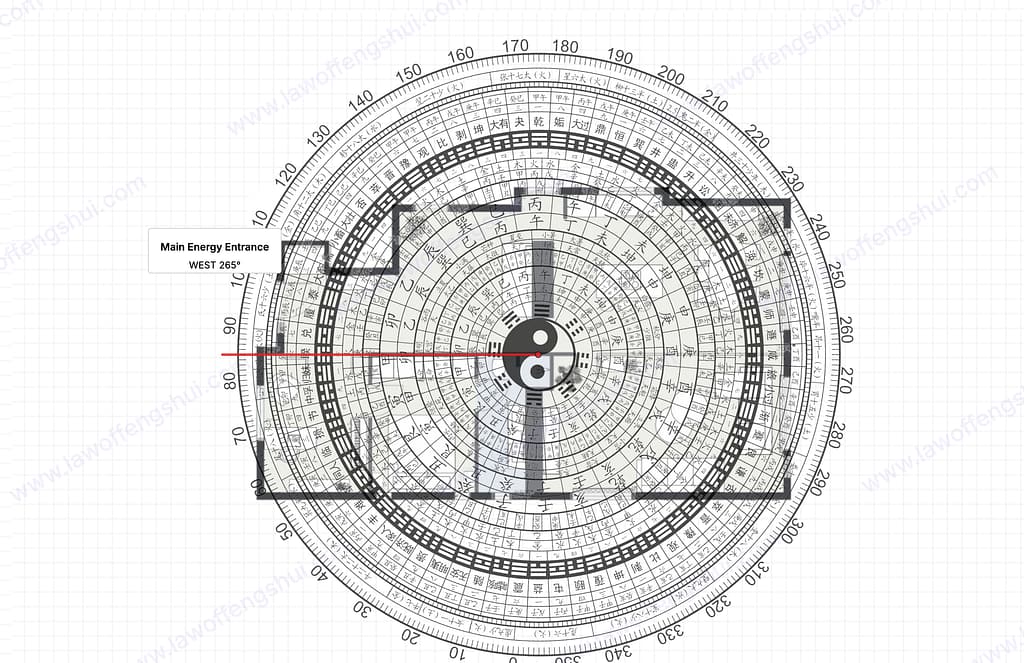
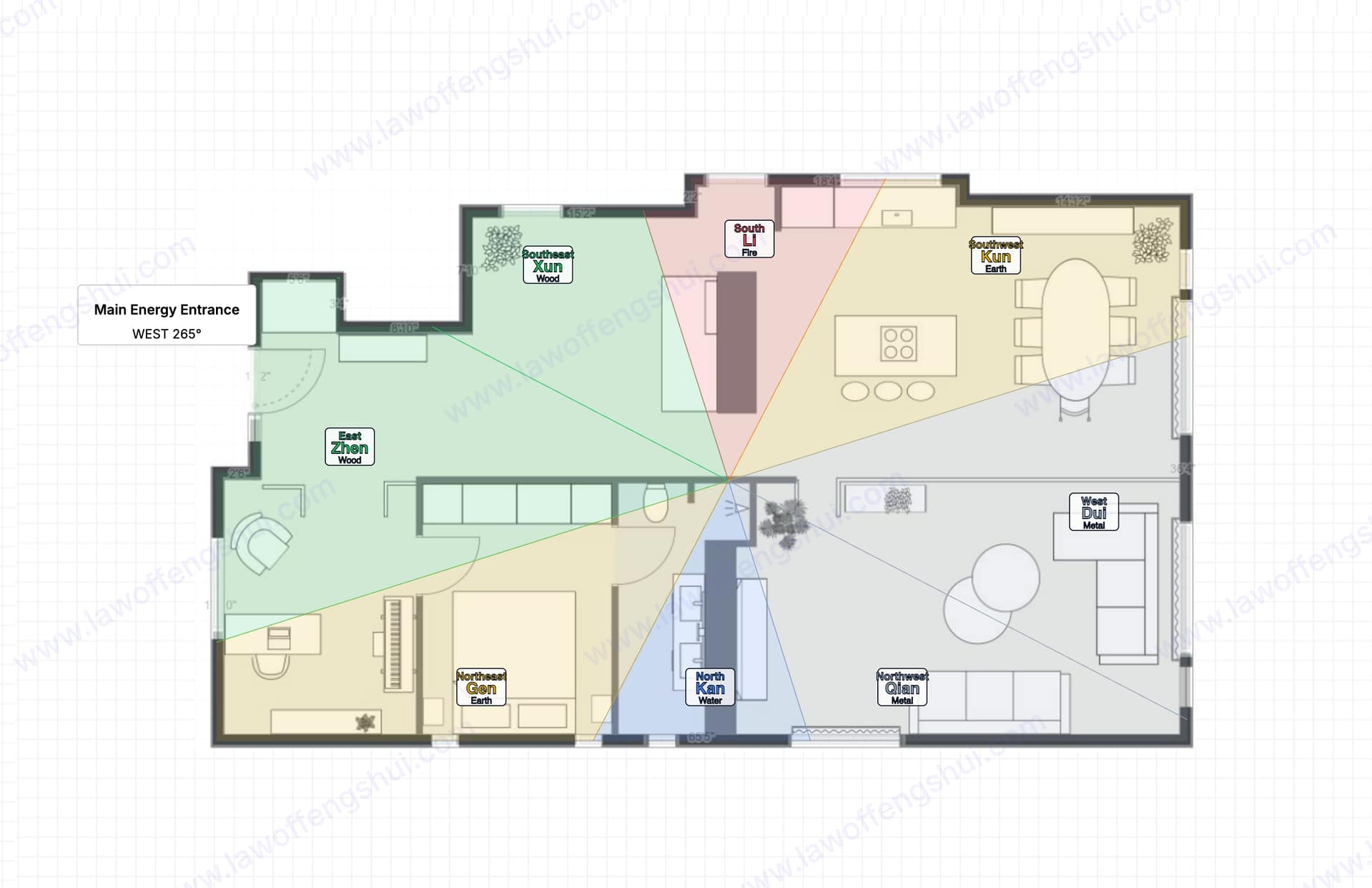
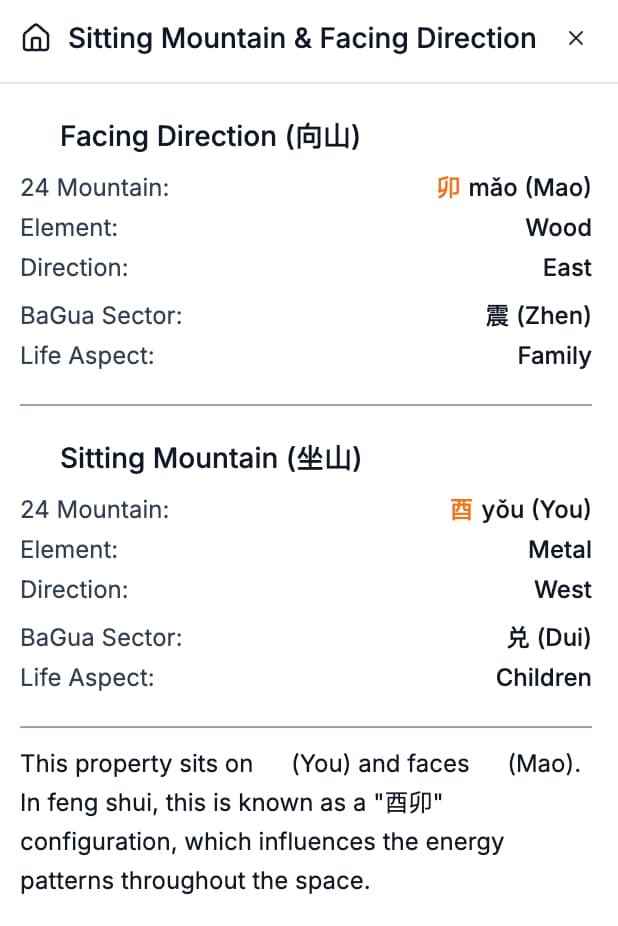
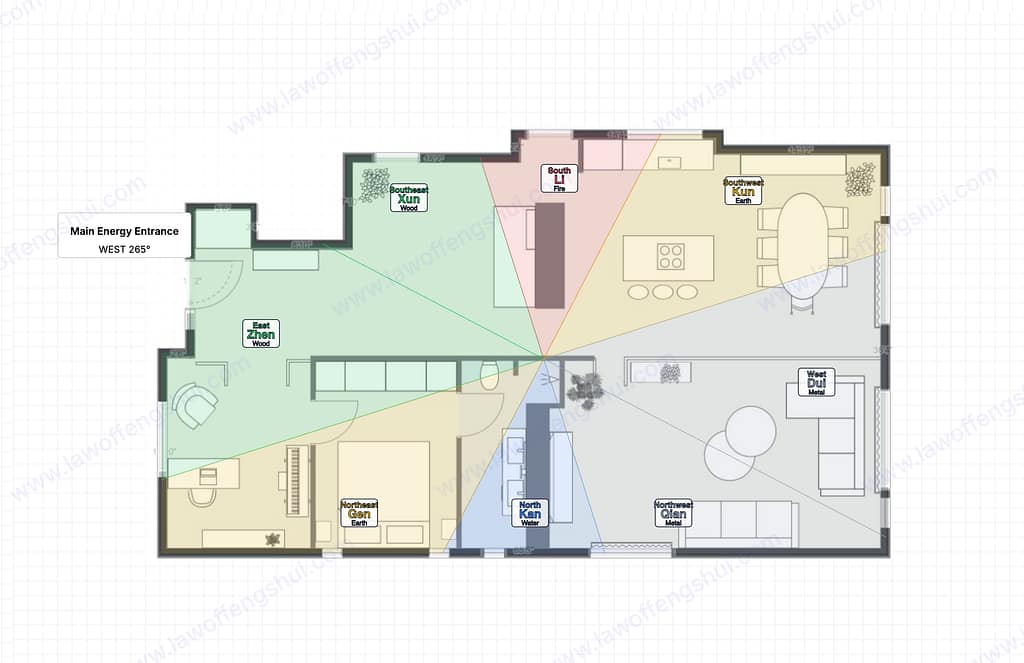
I mapped two feng shui overlays onto a home in La Jolla, California – Sitting & Facing direction and Ba Gua Sectors – to see how the commanding position and spatial zoning play out on a real floor plan.
The commanding position is the single most cited principle in feng shui. It applies to the three most important pieces of furniture in your home: your bed (where you spend the most passive time), your desk (where you work), and your stove (where you prepare nourishment).
The rule is simple. Position the furniture piece so the person using it can see the room’s main entrance without being directly in line with it. The ideal position is diagonally across from the door, with a solid wall behind you.
In classical feng shui, the reasoning involves qi flow. Energy enters through the door. Sitting in the commanding position allows you to receive that energy without being overwhelmed by it. The wall behind provides what practitioners call “mountain support” – stability and backing.
In environmental psychology, the reasoning involves threat detection. Humans evolved scanning for potential dangers. When you can’t see who’s approaching from behind, your autonomic nervous system stays partially activated. That background-level stress is subtle enough that most people don’t notice it consciously. They just feel vaguely uneasy, distracted, or “not comfortable” in certain rooms without knowing why.
Different vocabulary. Same furniture placement. Same outcome.
The question comes up constantly: is there any scientific basis for feng shui? The answer is more specific than most people expect.
A comparative analysis published in the International Journal of Advanced Scientific Research and Engineering (IJASRE) examined 118 Form School feng shui recommendations against two independent knowledge systems: Christopher Alexander’s pattern language (an architectural framework) and peer-reviewed environmental psychology research. The findings:
57% alignment. Out of 118 recommendations, 67 (57%) are consistent with at least one of the two knowledge systems. 45% align with environmental psychology findings. 34% align with Alexander’s pattern language. These include spatial orientation (commanding position), natural light optimization, air circulation patterns, and spatial proportions.
27% double consistency. Over a quarter of recommendations showed what the researchers called “double consistency” – validated independently by both pattern language and environmental psychology without either discipline referencing the other. When two unrelated frameworks from different cultures and centuries agree on the same spatial recommendation, that recommendation deserves attention.
Supporting research from other institutions:
Harvard’s Center for Health and the Global Environment found that workers in environments with good natural light and exterior views showed roughly 12% higher productivity compared to those in enclosed or poorly lit spaces. Classical feng shui has recommended positioning desks near windows with exterior views since the Tang Dynasty.
Princeton’s Neuroscience Institute demonstrated that visual clutter in a person’s environment competes for attention and reduces cognitive processing capacity. Feng shui’s principle of keeping the area around the commanding position clear and unobstructed aligns with this finding.
A controlled study on feng shui and sleep (published in the South Eastern European Journal of Architecture and Design) found that feng shui was the most statistically significant variable affecting self-assessed sleep quality, with a p-value below 0.001. Rooms arranged according to feng shui principles produced more positive heart rate variability and mood profiles.
None of this means every feng shui recommendation has scientific backing. The 57% figure means 43% doesn’t correlate with current environmental psychology research. Some classical principles involve metaphysical concepts that fall outside the scope of Western empirical methods. The commanding position happens to be in the overlap zone – the principle where both traditions agree.
In the 1970s, British geographer Jay Appleton proposed prospect-refuge theory: humans are drawn to environments that combine a wide view of their surroundings (prospect) with a sense of shelter and protection (refuge). The preference is evolutionary. Our ancestors survived by finding positions where they could spot approaching threats while remaining sheltered from behind.
The commanding position is prospect-refuge theory applied to furniture.
The bed against a solid wall with a view of the door: refuge (wall behind) plus prospect (sightline to entry). The desk diagonally across from the doorway with a wall at your back: same pattern. The stove where you can monitor the kitchen entrance: same pattern again.
Prospect-refuge research has been tested in parks, offices, classrooms, and hospitals. People consistently prefer and perform better in seats that offer both elements. A study on seat preference in public spaces found that occupants overwhelmingly chose positions with back support and a view of the entrance, confirming the neurological preference the commanding position addresses.
The difference between prospect-refuge theory and the commanding position is roughly 3,000 years. The spatial recommendation is the same. Environmental psychologists call it prospect and refuge. Feng shui practitioners call it the commanding position. Both identify the same diagonal-from-door, wall-behind arrangement as optimal for human wellbeing.
No competitor article on “feng shui commanding position” mentions prospect-refuge theory. That gap exists because the two fields don’t read each other’s literature. The overlap, once you see it, is hard to unsee.
Want to see commanding position analysis on a real floor plan?
Our sample report checks every room for commanding position compliance and scores furniture placement against Na Jia Li direction analysis.
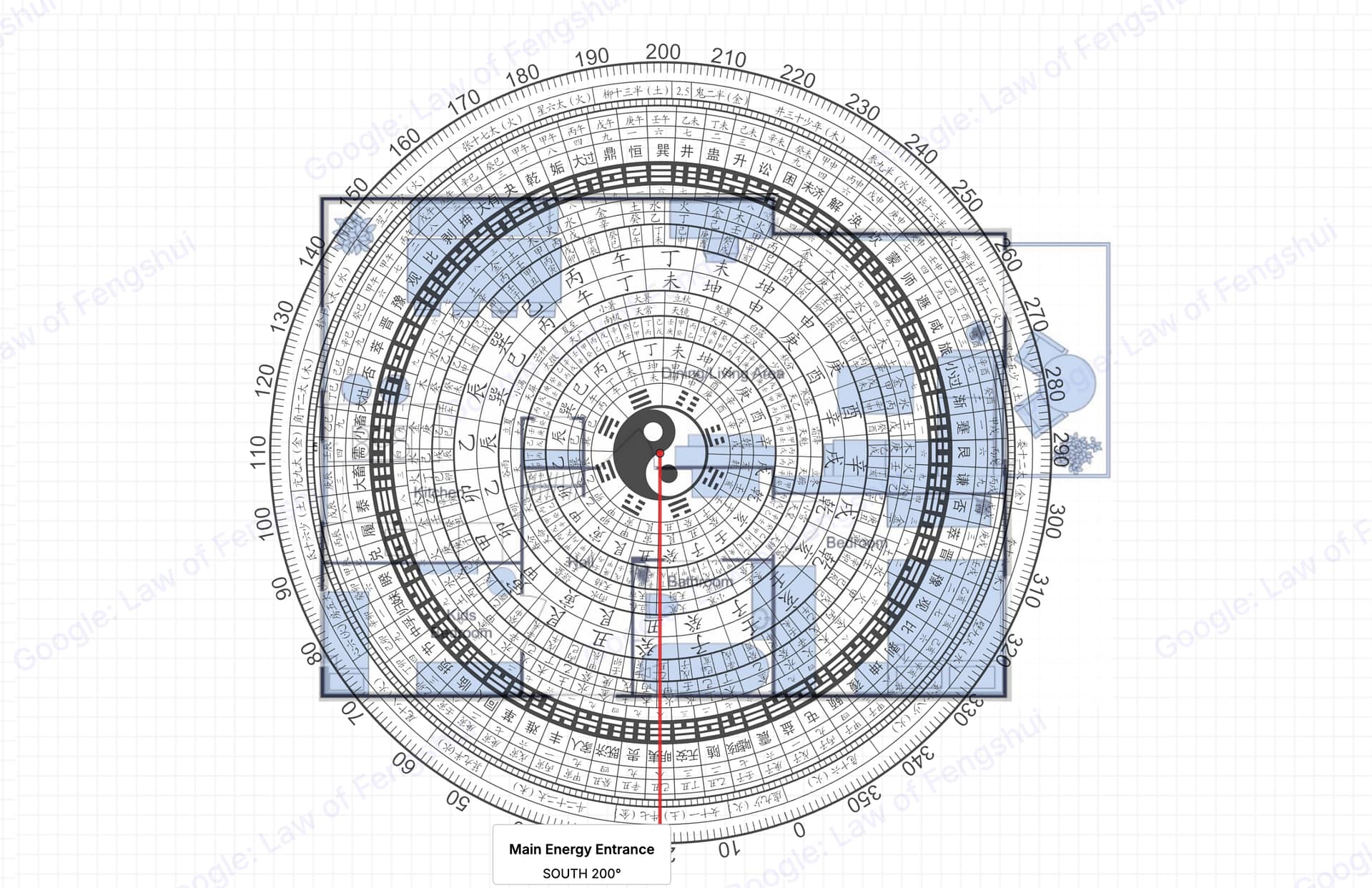
Before any feng shui overlay can be applied, the building’s compass orientation has to be measured. This is the calibration step that determines how every subsequent analysis maps onto the floor plan.
This La Jolla property sits on Mao 卯 (East, approximately 90 degrees) and faces You 酉 (West, approximately 270 degrees). In classical feng shui, this is a 卯酉 (Mao-You) configuration. The sitting direction (Mao/East) represents the “mountain” – stability, stillness, support. The facing direction (You/West) represents “water” – movement, openness, opportunity.
For low-rise buildings, the orientation is typically determined by the main entrance. For high-rise apartments, it’s determined by the largest living room window. This property has its Main Energy Entrance at WEST 265 degrees.
Every overlay shown in this series – Ba Gua Sectors, 24 Mountains, Nine Star, Zi-Wu, He Chong, Jie Sha, Twelve Longevity Cycles – starts from this single compass reading. Get the sitting direction wrong, and every calculation that follows is off.
The commanding position in the bedroom is about one thing: can you see the door from your bed without being directly in line with it? Feng shui bed placement is the most searched version of this principle, and the research supporting it is stronger than most people realize.
In this La Jolla home, the bed appears positioned against the far wall with a clear sightline to the bedroom door. That’s commanding position achieved. The back wall provides support (mountain behind in feng shui terms), and the occupant can see anyone entering.
Environmental psychology research supports this feng shui bedroom layout for sleep quality. A controlled study found that bedrooms arranged using feng shui principles showed statistically significant improvements in self-assessed sleep quality (p < 0.001), along with more positive heart rate variability profiles. When the autonomic nervous system doesn’t need to monitor for unseen approaches, the body settles into deeper rest more easily. People who sleep facing away from the door or with the door behind them often report feeling “exposed” without being able to articulate why.
The bedroom also landed in the Southwest sector (Kun/坤) on the Ba Gua overlay – the Love and Relationships zone. This is considered one of the best possible sector placements for a bedroom in classical feng shui. The room’s function (sleep, intimacy, recovery) matches the sector’s associated life area (romantic relationships, partnerships, receptivity).
Whether the sector placement affects sleep is a metaphysical claim. Whether the commanding position affects cortisol is a measurable one. Both point to the same arrangement.
If the commanding position is the best feng shui bed placement, the “death position” (also called the coffin position) is the worst. It’s when the bed is placed with the feet pointing directly at the bedroom door, in a straight line.
The name comes from the Chinese funeral tradition of carrying the deceased feet-first through the doorway. Sleeping in the coffin position is considered one of the strongest feng shui taboos.
From an environmental psychology perspective, the coffin position places the sleeper in the direct path of energy (or, in Western terms, airflow and visual exposure) from the doorway. Anyone entering the room has an unobstructed sightline to the sleeping person. The bed is maximally exposed and minimally sheltered – the opposite of prospect-refuge theory’s optimal arrangement.
The commanding position solves this by moving the bed diagonally. You can still see the door, but you’re not directly in line with it. The solid wall behind provides refuge. The diagonal angle provides prospect without exposure. Same room, different outcomes, based on where the bed sits relative to that doorway.
In this La Jolla home, the bed avoids the coffin position. It’s against the far wall at an angle to the bedroom door. The occupant can see the entry without being directly in its path. That’s the commanding position working as intended.
The office in this home tells a different story. The feng shui desk placement here has the desk positioned against the wall, and the occupant faces the wall with their back toward the office door and the front door.
That’s commanding position not achieved.
In environmental psychology terms, this means the person working at that desk has their back to the primary entry point. Every time someone approaches, the occupant can’t see them coming. The autonomic nervous system stays partially activated – scanning for the approach it can hear but not see. Over an 8-hour workday, that background-level cortisol adds up.
The fix is straightforward and free: rotate the desk so the occupant faces the door. You don’t need to move the desk to a different room. You don’t need to buy new furniture. Just turn it around so you can see who’s coming.
The office landed in the Northeast sector (Gen/艮) on the Ba Gua overlay – the Knowledge and Wisdom zone. Work and study happening in the sector associated with self-cultivation and intellectual growth. From a feng shui perspective, the room placement is excellent. The furniture placement within the room is the problem.
This distinction matters. Feng shui evaluates both the room’s position in the building (Ba Gua sector) and the furniture’s position within the room (commanding position). You can have the right room in the right sector with the desk facing the wrong direction. Both layers need to work.
Curious how the commanding position combines with compass-level analysis?
Our sample report runs both physical position checks and 15+ classical compass systems on an actual property.
The Ba Gua is an octagonal framework that divides space into 8 sectors, each 45 degrees wide, each associated with a life area. The sectors are positioned based on the building’s compass sitting direction – not relative to the front door (that’s the BTB/Western method, which uses a different system).
For this Mao-sitting (East) property, the 8 sectors mapped as follows:
| Sector | Direction | Trigram | Life Area | Room | Match? |
|---|---|---|---|---|---|
| Kan | North | 坎 | Career | Family Room (partial) | Good |
| Gen | Northeast | 艮 | Knowledge | Office | Excellent |
| Zhen | East | 震 | Family | Living Room | Excellent |
| Xun | Southeast | 巽 | Wealth | Kitchen (partial) | Good |
| Li | South | 离 | Fame | Kitchen (partial) | Neutral |
| Kun | Southwest | 坤 | Love | Bedroom | Excellent |
| Dui | West | 兑 | Children | Entry area | Neutral |
| Qian | Northwest | 乾 | Helpful People | Family Room (partial) | Good |
Three out of four primary rooms scored “Excellent” – meaning the room’s practical function aligns directly with the sector’s associated life area. The office is for knowledge and study; it’s in the Knowledge sector. The bedroom is for rest and intimacy; it’s in the Love sector. The living room is for family gatherings; it’s in the Family sector.
The architect who designed this floor plan was optimizing for natural light, traffic flow, building code compliance, and livability. The Ba Gua overlay mapped functional alignment that wasn’t part of the design brief. That’s the 57% finding in miniature.
The commanding position is the most actionable feng shui principle because it requires zero renovation. Here’s the check for each room:
Bedroom. Lie in bed. Can you see the bedroom door without turning your head more than 45 degrees? Is there a solid wall behind the headboard (not a window)? If yes to both, you’re in commanding position. If not, move the bed.
Home office. Sit at your desk. Can you see the office door or room entrance? Is there a solid wall behind you? If you face a wall with your back to the door, rotate the desk. If the room layout makes this impossible, place a small mirror on the desk that reflects the door – classical feng shui accepts this as a secondary solution.
Kitchen. Stand at the stove. Can you see the kitchen entrance? Most kitchens place the stove against a wall facing away from the entry. A mirror behind the stove (on the backsplash or range hood) that reflects the room entrance is the traditional remedy.
None of these fixes cost anything. They take minutes. And the cortisol research suggests you’ll feel the difference within days, not weeks.
The overlap exists because both disciplines optimize for the same underlying human needs. Architects design for visibility, natural light, circulation, and spatial comfort. Feng shui practitioners evaluate qi flow, orientation, and spatial balance. The vocabulary differs. The spatial outcomes overlap more than either profession typically acknowledges.
The 57% alignment finding isn’t surprising when you consider what both fields are actually doing: evaluating how spatial configuration affects human wellbeing. One uses empirical research methods. The other uses observational principles refined over millennia. When they agree, the recommendation is worth taking seriously regardless of which framework you prefer.
The commanding position is the clearest example. “Reduce cortisol by positioning the occupant to see the entry point” and “improve qi flow by placing the user in the commanding position” produce the same desk arrangement. The mechanism you believe in is optional. The furniture ends up in the same place.
2026 is the Year of the Fire Horse. Fire energy is expansive, fast-moving, and momentum-driven. The annual chart has zero Water element, which means there’s no natural counterbalance to the intensity.
In this context, the commanding position becomes more relevant, not less. Fire energy amplifies everything – including stress responses. If your autonomic nervous system is already partially activated because your desk faces the wall, a Fire year’s intensity compounds it. Stabilizing your spatial arrangement gives you a foundation before the year’s energy pushes harder.
The bedroom commanding position is especially important in a Fire year. Sleep quality directly affects stress recovery. If the bed is positioned so you can see the door with solid wall support behind, the parasympathetic nervous system engages more readily. Better rest, better resilience against the year’s fast-moving energy.
Curious what 15+ classical feng shui systems reveal about a real home?
Our sample report shows every overlay on an actual floor plan so you can see the difference between classical analysis and generic advice.
What is the feng shui commanding position? The commanding position is a classical feng shui principle that says your bed, desk, and stove should be placed where you can see the room’s main entrance without being directly in line with it. The ideal position is diagonally across from the door with a solid wall behind you. Environmental psychology research independently supports this arrangement, showing reduced cortisol levels when people can see entry points from their primary position.
Does the feng shui commanding position actually work? A 2019 environmental psychology study found that people who could see room entrances from their primary seated position had measurably lower cortisol (the stress hormone). A comprehensive review found 57% of classical feng shui Form School recommendations align with peer-reviewed environmental psychology research. The commanding position is in the overlap zone where both traditions agree.
How do I know if my bed is in the commanding position? Lie in bed and check: can you see the bedroom door without turning your head more than 45 degrees? Is there a solid wall behind the headboard, not a window? Do you have a clear view of the entry without being directly in line with the doorway? If all three conditions are met, your bed is in the commanding position.
What if I can’t move my desk to face the door? If the room layout makes repositioning impossible, classical feng shui accepts a secondary solution: place a small mirror on your desk that reflects the doorway. This gives you visual awareness of the entrance without requiring a full desk rotation. The key principle is visual access to the entry point.
What is a Ba Gua sector in feng shui? The Ba Gua divides your floor plan into 8 compass sectors, each 45 degrees wide, each associated with a life area: Career (North), Knowledge (Northeast), Family (East), Wealth (Southeast), Fame (South), Love (Southwest), Children (West), and Helpful People (Northwest). The sectors are mapped based on the building’s compass sitting direction. Room-to-sector alignment can reveal whether a space’s practical function matches its energetic designation.
Does feng shui bedroom layout affect sleep quality? The commanding position – seeing the door from bed with wall support behind – is the feng shui bedroom layout principle with the strongest environmental psychology backing. Research shows that when the autonomic nervous system doesn’t need to monitor for unseen approaches, the body settles into deeper rest more easily. The bedroom’s Ba Gua sector (Love/Relationships in this case study) is a secondary consideration.
Is there scientific evidence for feng shui? A comprehensive review published in IJASRE found 57% of classical Form School feng shui recommendations align with environmental psychology research. 27% showed “double consistency” – validated by both disciplines independently. Harvard research links natural light and views to 12% productivity gains. Princeton’s neuroscience lab found clutter impairs cognitive processing. These findings overlap with feng shui principles about light, space, and orientation.
What is the death position or coffin position in feng shui? The death position (coffin position) is when the bed is placed with the feet pointing directly at the bedroom door in a straight line. The name comes from the Chinese tradition of carrying the deceased feet-first through doorways. From an environmental psychology perspective, this placement maximally exposes the sleeper to the doorway – the opposite of the prospect-refuge arrangement that the commanding position creates. The fix is to move the bed diagonally so you can see the door without being directly in its path.
What is prospect-refuge theory and how does it relate to feng shui? Prospect-refuge theory, proposed by geographer Jay Appleton in the 1970s, states that humans prefer environments combining a wide view of surroundings (prospect) with a sense of shelter (refuge). The feng shui commanding position is this theory applied to furniture: solid wall behind you (refuge) plus sightline to the door (prospect). Both frameworks independently identify the same diagonal-from-door, wall-behind arrangement as optimal. The difference is roughly 3,000 years. The spatial recommendation is the same.
What is the difference between BTB feng shui and classical feng shui? BTB (Black Tantric Buddhist) feng shui, introduced to the West in the 1970s-80s by Professor Lin Yun, orients the Ba Gua relative to the front door – the wealth corner is always the far-left. Classical compass school feng shui measures the building’s actual compass bearing and maps sectors based on the sitting direction. The same home can have different sector layouts depending on which system you use. Classical feng shui requires a compass; BTB does not.