Address
304 North Cardinal St.
Dorchester Center, MA 02124
Work Hours
Monday to Friday: 7AM - 7PM
Weekend: 10AM - 5PM
Address
304 North Cardinal St.
Dorchester Center, MA 02124
Work Hours
Monday to Friday: 7AM - 7PM
Weekend: 10AM - 5PM

When Clients Ask About "Energy Flow," Do You Have a Systematic Answer?
The request is becoming more common. Wellness-focused clients. Spiritually-minded homeowners. They want buildings that don't just look good. They want buildings that feel right. You understand form, function, and structure. But spatial energy analysis has never had a systematic framework for architects. Until now.
Where Environmental Psychology Meets Classical Spatial Wisdom
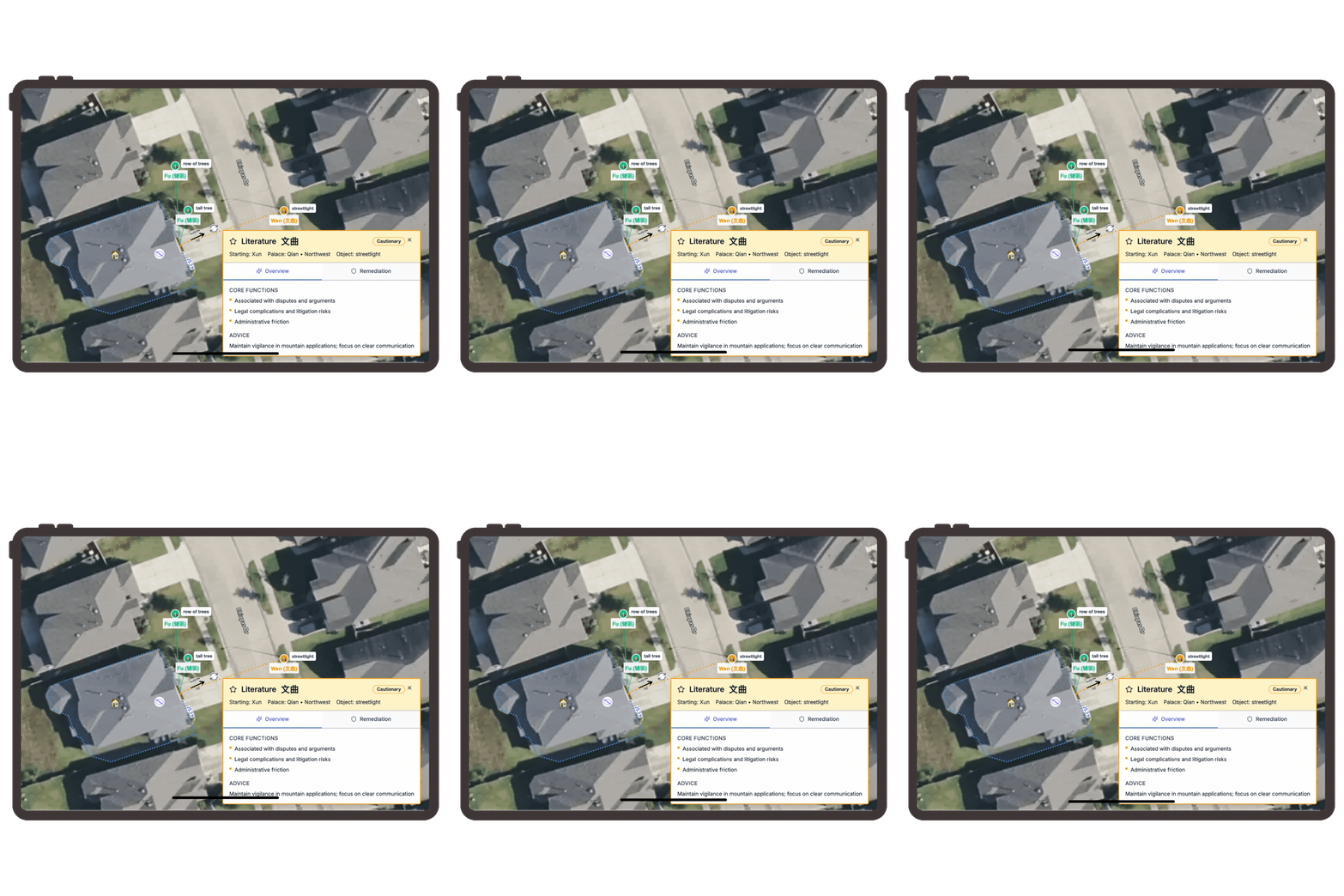
Site Analysis Before You Draw a Line
Analyze the surrounding environment using satellite maps. See how roads, water features, and neighboring structures influence the site. Make informed decisions about building placement and orientation.
2D/3D Synchronized Views
Coming soon!
Work in floor plan view and see results in three dimensions simultaneously. Present to clients with visual clarity that makes abstract concepts tangible.
Translate Between Traditions
The AI assistant explains spatial energy concepts in architectural language. "Energy flow" becomes circulation analysis. "Challenging areas" become sight line issues. Bridge Eastern wisdom with Western practice.

Optimal Facing Direction, Quantified
Determine the ideal building orientation based on landforms, roads, and environmental factors. Classical Form School principles meet data-driven design. No guessing required.
Floor Plan Validation
Test your designs against spatial energy principles during schematic phase. Identify issues with door alignments, room placements, and circulation paths while changes are still cheap to make.
Energy Zone Visualization
See how different areas of the floor plan correspond to eight functional life areas. Understand which rooms support which functions and design accordingly.
Rarely. Most spatial energy principles concern orientation, proportion, and circulation. These are elements you already optimize. The system provides insights and alternatives, not mandates. You stay in control.
Significantly. Classical spatial traditions emphasize connection to nature, natural light, and human comfort. That's exactly what biophilic design promotes. Many principles overlap; the terminology differs.
Different schools interpret principles differently. Our system uses classical Form and Compass approaches, which are the most widely accepted traditions. Detailed analysis shows methodology, enabling productive collaboration.
The wellness real estate market exceeds $275 billion globally. Clients increasingly want spaces designed for wellbeing, not just aesthetics. Architects who can articulate how their designs support human flourishing have a competitive advantage.